Upcoming:
September, 2026
Leaking Collections, curated by Roxana Fabius at 601 601Artspace, NYC.
-----------------------------------------------------------------------------------------------------------------
August 2026
Choreographic Devices V
Friday, August 7, 2026 at Mimosa House, London
 (image: Fabrice Mazliah’s "The Manufactured Series, Duet#5”)
Since 2022, and against the pressured backdrops of permacrisis and depletion, Choreographic Devices has been testing how bodies, material assemblages, organisational forms and modes of being alongside one another might be choreographed otherwise. Drawing on a broad ecology of practices and bringing together key local and international practitioners, the platform understands choreographic inquiry as extending beyond the event itself into its organisational architectures. Its modular and scalable format moves fluidly between integrated multi-day programmes, screenings, discursive exchanges, workshops and performative gatherings.
For its fifth iteration at Mimosa House, Choreographic Devices presents a moving-image programme exploring the choreographic as an expanded methodology for organising relations across bodies, images, perception and time. Selected by friends and allies of Choreographic Devices, the assembled works approach moving image as a site of choreographic inquiry, inviting new ways of sensing, composing and orienting perception across cinematic and choreographic registers.
This iteration features selections and contributions by Murat Adash, Funmi Adewole Eliott, Daniel Blanga Gubbay, Ofri Cnaani, Nicola Conibere, Theo Jean Cuthand, Claire Denis, Marie de Brugerolle, Future of Dance, Linus Gratte, Martin Hargreaves, Jack Hogan, Mica Levi, Ligia Lewis, Fabrice Mazliah, Sara Sassanelli, Edgar Schmitz, Esther Sadiqquie, P. Staff, Kostas Stasinopoulos, Tabitha Thorlu-Bangura, and Anna Wittenberg.
Choreographic Devices is convened by Murat Adash, Ofri Cnaani, Sara Sassanelli and Edgar Schmitz, and produced by Sara Sassanelli (Alice Agency), with technical support by Jack Hogan.
https://gel.now/events/712
https://www.mimosahouse.co.uk/choreographic-devices-v
-----------------------------------------------------------------------------------------------------------------
July 2026
Opening of What Knots Knot Knots at Noorderlicht https://noorderlicht.com/en/wkkk


What Knots Knot Knots, curated by Musoke Nalwoga & Roosje Klap, is on view from 26 June 2026 at VHDG in Leeuwarden, Herinneringscentrum Kamp Westerbork and DIEP in Drenthe, Groninger Museum (location Wall House#2) and Noorderlicht in Groningen - explores the hidden colonial past of the Northern Netherlands and its impact on the present.
My project, Re-collect, Re-correlate , Re-colonise, examines what happens when Dutch colonial archives are digitised, returned and reactivated, often under unequal conditions of ownership, access and technological dependency.
"One of her starting points is the Surinamese colonial archive. Between 2010 and 2017 the Dutch National Archives digitised around 800 metres of records, some 5.5 million pages, before the originals were returned to Suriname, with digitisation and online access made a Dutch condition for that return. What does it mean to give archival material back while keeping the digital copies, the metadata and the access systems in the former colonial centre? Cnaani developed the work through archival images, filmed conversations and a workshop at the Surinati community centre, together with participants of Surinamese and Caribbean background.
With them she asks how systemic violence is passed on across generations and held in the body. Such violence is recorded in archives and institutions, but it also lives in habits, pain, breath, posture and the nervous system. Asking where pain is felt becomes a way to reach forms of knowledge that official archives cannot hold, and to sense how these histories still resonate in a shared body under constant strain. Cnaani shows how archives order, exclude and steer as much as they preserve, and how colonial logic carries on in datasets, interfaces and search systems, from page to database and from image to model".
The project's title derives from a quote by Donna Haraway, reflecting that the connections we highlight determine the stories we tell. Rather than presenting one grand narrative, the exhibition intertwines multiple, overlapping local histories across the region.
The exhibition runs through August 30, 2026, across multiple venues in the northern Netherlands
-----------------------------------------------------------------------------------------------------------------July 2026

MDes Labs at Bezalel Acdemy
-----------------------------------------------------------------------------------------------------------------
July 2026
Infrastructures + Intelligibility, the second annual conference of the Digital x Data Research Centre

Infrastructures + Intelligibility, the second annual conference of the Digital x Data Research Centre, 01-02 July 2026, London South Bank University. https://www.centreforthestudyof.net/digitalxdata/

The presentation examines the concept of the Digital Twin (DT), defined as a real-time virtual entity of physical systems used for prefiguration, optimisation, and preservation. Mediating between human perception and, often invisual, machine processes, a DT translates data and simulations into interfaces promising realism, legibility, and control. Using Digital Twin Dubai as a case study, we trace how DTs shift from simulations to infrastructural images. Drawing on theories of operational and networked images, we define infrastructural imagery not as a mimetic representation but as a dynamic, processual entity emerging from real-time feedback loops between physical objects, data streams, and computational models. This infrastructural image also produces ‘infrastructural time’, privileging calculable futurity and continuous optimisation over lived experience. Ultimately, infrastructural imagery facilitates new forms of recursive governance, involving accelerating cycles of decision-making and value extraction through data-driven, real-time intervention.
-----------------------------------------------------------------------------------------------------------------
June 2026
Collective Research at Royal Netherlands Institute in Rome (KNIR)

With my colleges Dr Annet Dekker and Dr. Noa Roei of the Amsterdam School for Cultural Analysis (ASCA), University of Amsterdam, we spent 5 days Royal Netherlands Institute in Rome (KNIR) working on our ongoing collective research on Digital Twins, conducted within the framework of ASCA and the Centre for the Study of the Networked Image (CSNI) at London South Bank University.
-----------------------------------------------------------------------------------------------------------------
May 2026
The Nervous System at MLZ Art Dep, Trieste, curated by Francesca Lazzarini, with works by Ofri Cnanni and Alessandro Sambini.
https://www.mlzartdep.com/mostre/the-nervous-system


The nervous system is irritated, shaken, aflame. In times of radical technological development and brutal geopolitical crises, bodies are more and more subject to unbearable pressures, high-speed accelerations, and conditions of distress, affliction, and violence. Through works by Ofri Cnaani and Alessandro Sambini, the exhibition explores the intense yet fragile interconnectedness between bodies, images, and devices, taking the nervous system as its central concept.
Primarily understood as the biological network of neurons and synapses that enable human perception and interaction with the environment, the nervous system also serves as inspiration for AI neural networks: computational models capable of learning and solving problems –from image recognition and language processing to automatic censoring and predictive modelling–which are increasingly shaping contemporary life. These two levels are inextricably intertwined with the global one, whose systems relentlessly grind images and bodies in pursuit of economic, military, and political power, driving the world towards an ever more inflamed state of emergency.
-----------------------------------------------------------------------------------------------------------------
May 2026
What Knots Knot Knots - Research phase, at Groningen, The Netherlands


In May I spent time in the unbelivable Wall House 2 as part of What Knots Knot Knots. What Knots Knot Knots is an arts and research programme developed with a network of cultural institutions across the three northern provinces of the Netherlands, including Groninger Archieven, Groninger Museum, Universiteitsmuseum Groningen, Herinneringscentrum Kamp Westerbork, Campus Fryslân, VHDG Leeuwarden and the Fries Museum. Through short residencies, archival research and community engagement, the programme examines the entanglements of the region’s material and immaterial colonial heritage and their continuing effects in the present.
During the residency in Groningen, I developed a new body of work through archival images, filmed conversations and a workshop at the Surinati community centre with participants of Surinamese and Caribbean backgrounds. Looking together at archival images, the group asked: Where do you feel the pain? From this question, the work traces how systemic violence is transmitted across generations and stored in the body through sensation, posture, breath and the nervous system. It considers how transgenerational pain and embodied knowledge move through images and voices, and how colonial afterlives continue to be reorganised through contemporary neocolonial technologies and infrastructures, where historical violence is still registered as sensory pressure and nervous distress.
-----------------------------------------------------------------------------------------------------------------
March 2026
Sidelo>ded reading group

On March Stu Hansom and I instiated sidelo>ded, a small group of researchers held a number of discussions across timezones around the urgent need for forms, forums and formats they felt were needed to provide even the smallest opening for thought and ideas under these conditions.
These discussions coalesced as sidelo>ded. A monthly online reading group born out of a desire to sit together, share texts and read them with friends. The texts are those we want to read with others, texts friends want to read with us, or difficult texts that are hard to read alone, using them as a space to try out ideas, forms of reading and methods of being together.
The group meets once a month, at 7pm (CET) on a Monday evening for two hours.
Texts are chosen by participants who then introduce the text within the session, opening up the discussion.
here is some info in case you are interested: https://unimaginablefuture.gallery/sideloaded-reading-group.html
-----------------------------------------------------------------------------------------------------------------
March 2026
Platforms and Performativity research Seminar at Curator Lab, Stockholm

Lead a seminar about platformed bodies, contactless condtion, and perfromance as a curatorial reseach methodology as part of eminar at the Curator Lab seminar as part of 2025/2026 Platforms and Performativity research strands directed by Marti Manen with the collaboration of guest lecturers Carmen Lael Hines and Pontus Pettersson.https://curatorlab.se/
-----------------------------------------------------------------------------------------------------------------
February, 2026
Unfolding Desires / San Giovanni Park in Trieste, Italy


Mad week in the madhouse. Over the past year I have been working with community members at San Giovanni Park in Trieste, where one of the most radical transformations in psychiatric history began: deinstitutionalization, the opening of the asylum, and the end of institutional confinement. In the early 1970s, psychiatrist Franco Basaglia led a movement to close psychiatric asylums in Italy. In 1978, Italy passed Law 180, mandating the closure of psychiatric hospitals and replacing them with community-based services. “When patients are tied up, subjugated and held captive,” he wrote, “I don’t believe any kind of therapy can help them”. Times later Franco Rotelli, his successor, would remark that “using language to enter into madness is like using a tape measure to measure a liquid.”
What can San Giovanni’s history of deinstitutionalization teach us about its present systems of documentation and memory preservation? How might this legacy inform a rethinking of archival, classificatory, and digitization practices today?
In collaboration with various members of this community, I have been working at the the Documentation Centre of the former psychiatric hospital, as part of Unfolding Desires, led by Lazzarini and Puriya Mehr, approached the archive not as a repository of the past but as a site for imagining other futures grounded in struggles for emancipation. As the Documentation Centre itself risks marginalization and its digitization is still in a state of becoming, my work focused on digitization and classification as a relational practices, informed by notion of neighbouring and proximities. In the tradition of San Giovanni Park, the often addressed themselves, as ‘the loonies’, its was the most crazy fulfilling week, reminder that "Da vicino nessuno è normale", a famous phrase attributed to Basaglia, stating that if you look up close, no one is normal.
-----------------------------------------------------------------------------------------------------------------
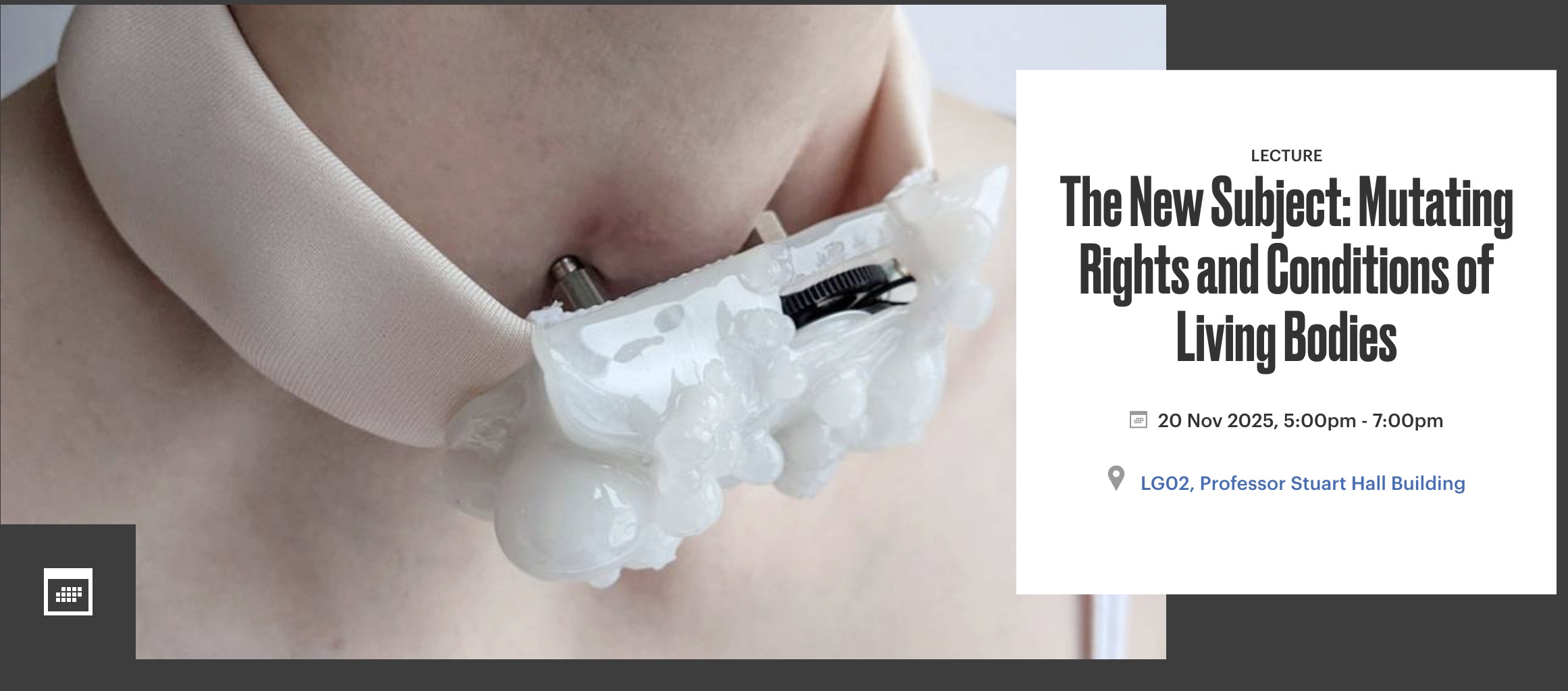
A Public programme panel discussion with Maria Veits, Anna Bitkina, Micha Frazer-Carroll, and Ofri Cnaani. Full Program
My talk, titled The Nervous System, asks how shock, fear, and information transmit through social and biological bodies, and focuses on visual and sensory proximity to images of atrocity in an era when “bare life” is increasingly managed by computational protocols.
-----------------------------------------------------------------------------------------------------------------

Sunsut Kino in Salzburg: Films by Ofri Cnaani
13.08.2025 21:00
Introduction by Jess Łukawska, Salzburger Kunstverein. Followed by a Q&A with Ofri Cnaani and Jess Łukawska :https://salzburger-kunstverein.at/sunsetkino_ofricnaani_en
August 4-16, 2025
Hounored to come back to the Salzburg Internaional Summery Acdemy this year
more info about my course is here
-----------------------------------------------------------------------------------------------------------------
June, 2025:
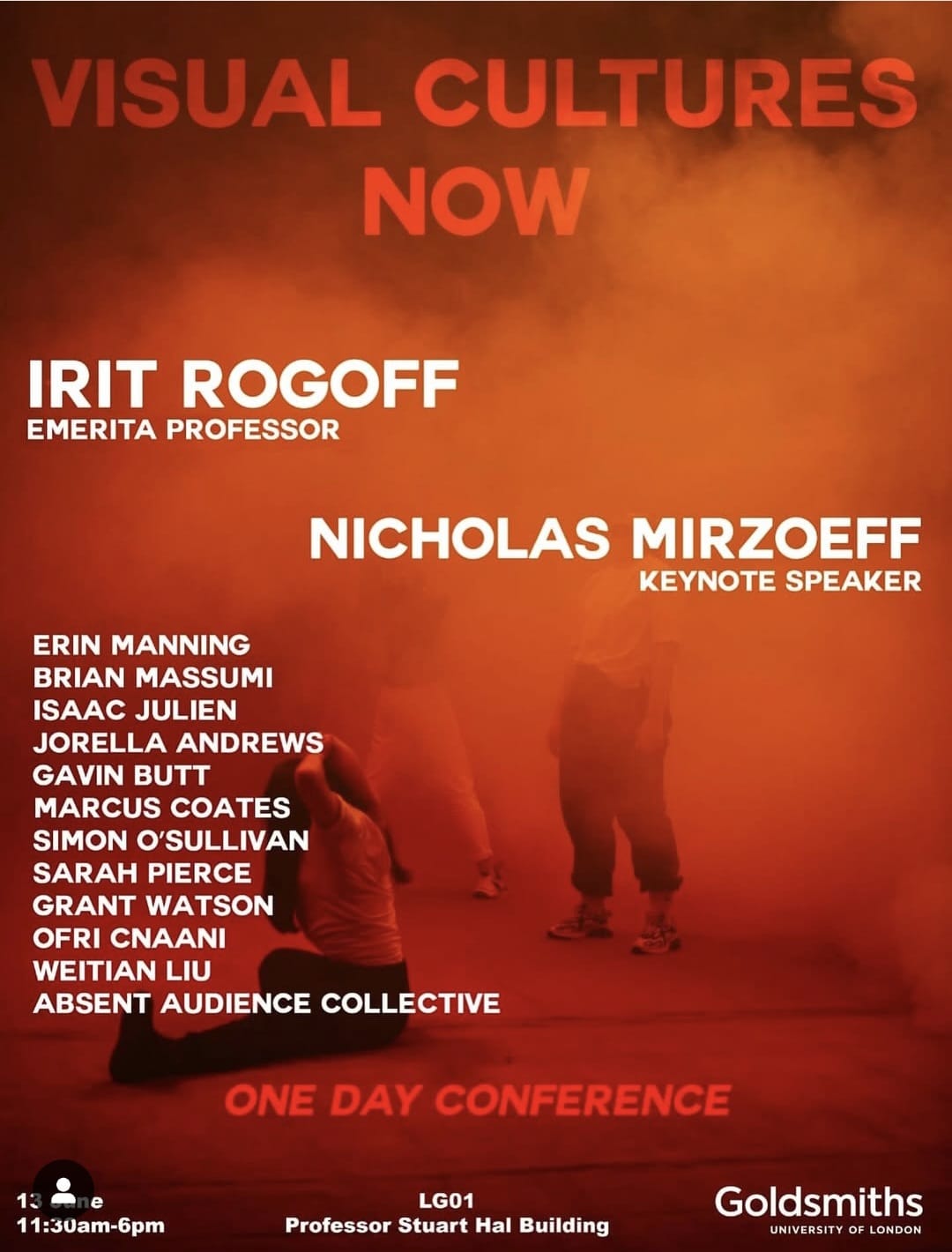
Visual Cultures NOW at Goldsmiths, London & Sustainable Forms at University of Bern


-----------------------------------------------------------------------------------------------------------------
Read A conversation between Annet Dekker, Or Tshuva and Ofri Cnaani about ‘The Contactless Condtion’ at Exhbtion Research Lab, Liverpool.
-----------------------------------------------------------------------------------------------------------------
Spring 2025
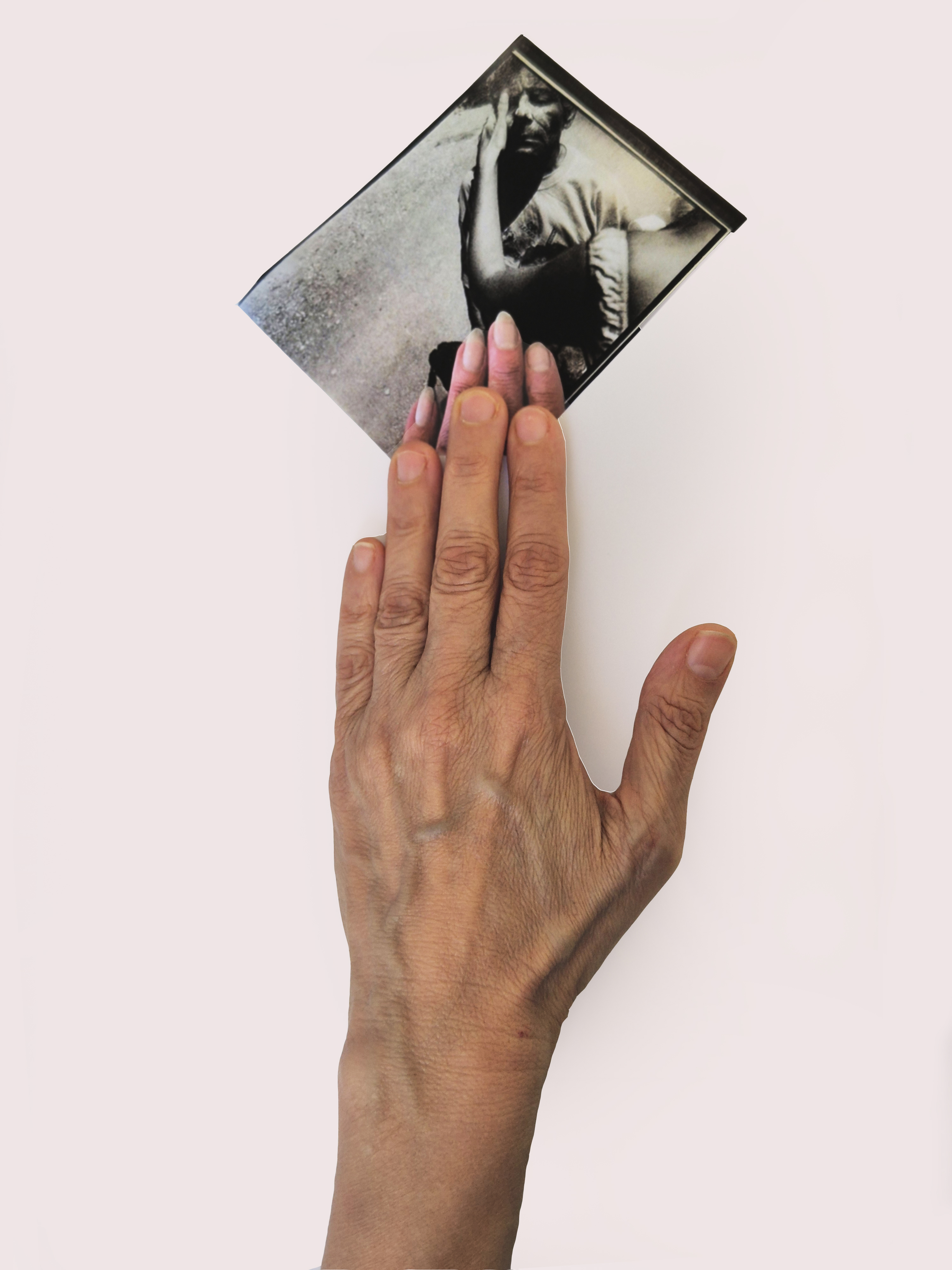
Unfolding Desire at Trieste Contemporanea
A project by AiR Trieste in partnership with La Collina Social Cooperative,
Trieste Contemporanea, and Griffin Art Projects
Curators: Francesca Lazzarini and Elham Puriya Mehr
Artists: Ofri Cnaani and Evann Siebens
In collaboration with: Escuchame and Collettivo Marte


-----------------------------------------------------------------------------------------------------------------
Minor Inscriptions, 2025
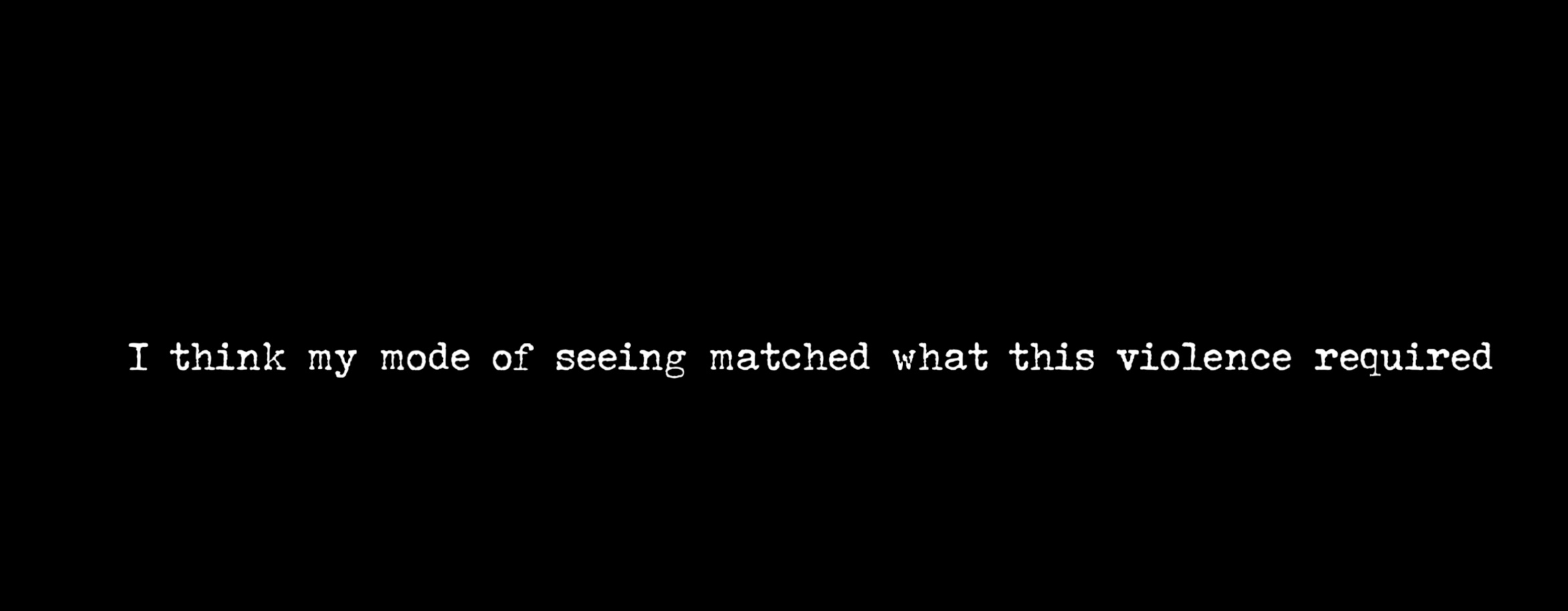
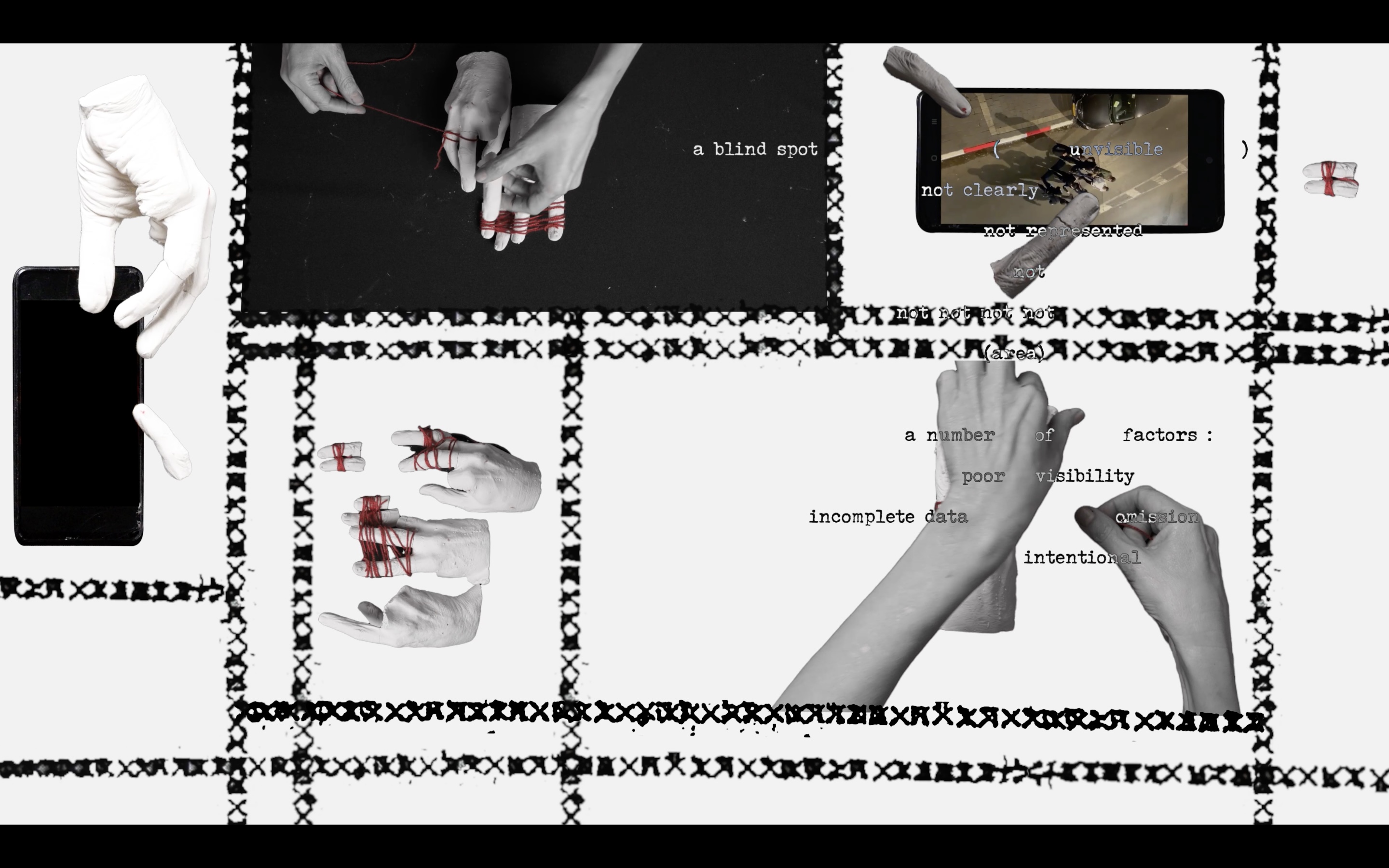
Minor Inscriptions investigates the invisible borders imposed by martial law in Jaffa between 1948 and 1950. Using archival documents, maps, testimonies, and video fragments, the work traces boundaries that have vanished physically yet remain embedded in current spatial, technological, and political infrastructures, actively shaping the present. It reflects on forms of "bureaucratic violence," where control is administered through invisibility, enforced via protocols and permits—daily practices that regulate movement and access. Although martial law officially ended, its logic persists, continuing to structure contemporary urban life.
The work was first exhibited as part of At City Level, at Tel Aviv-Yafo City Museum
Curator: Yael Messer
-----------------------------------------------------------------------------------------------------------------
Winter, 2025
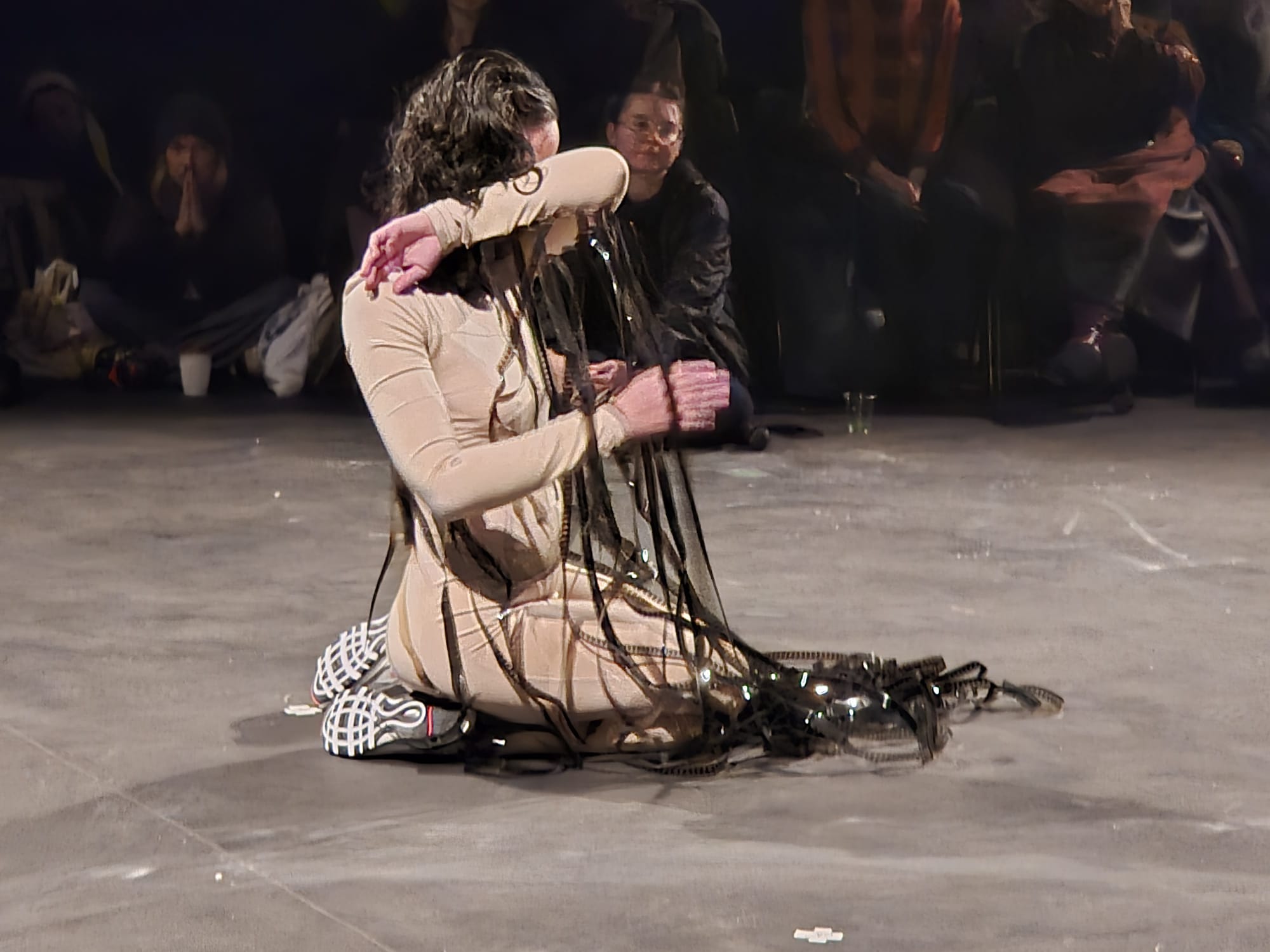
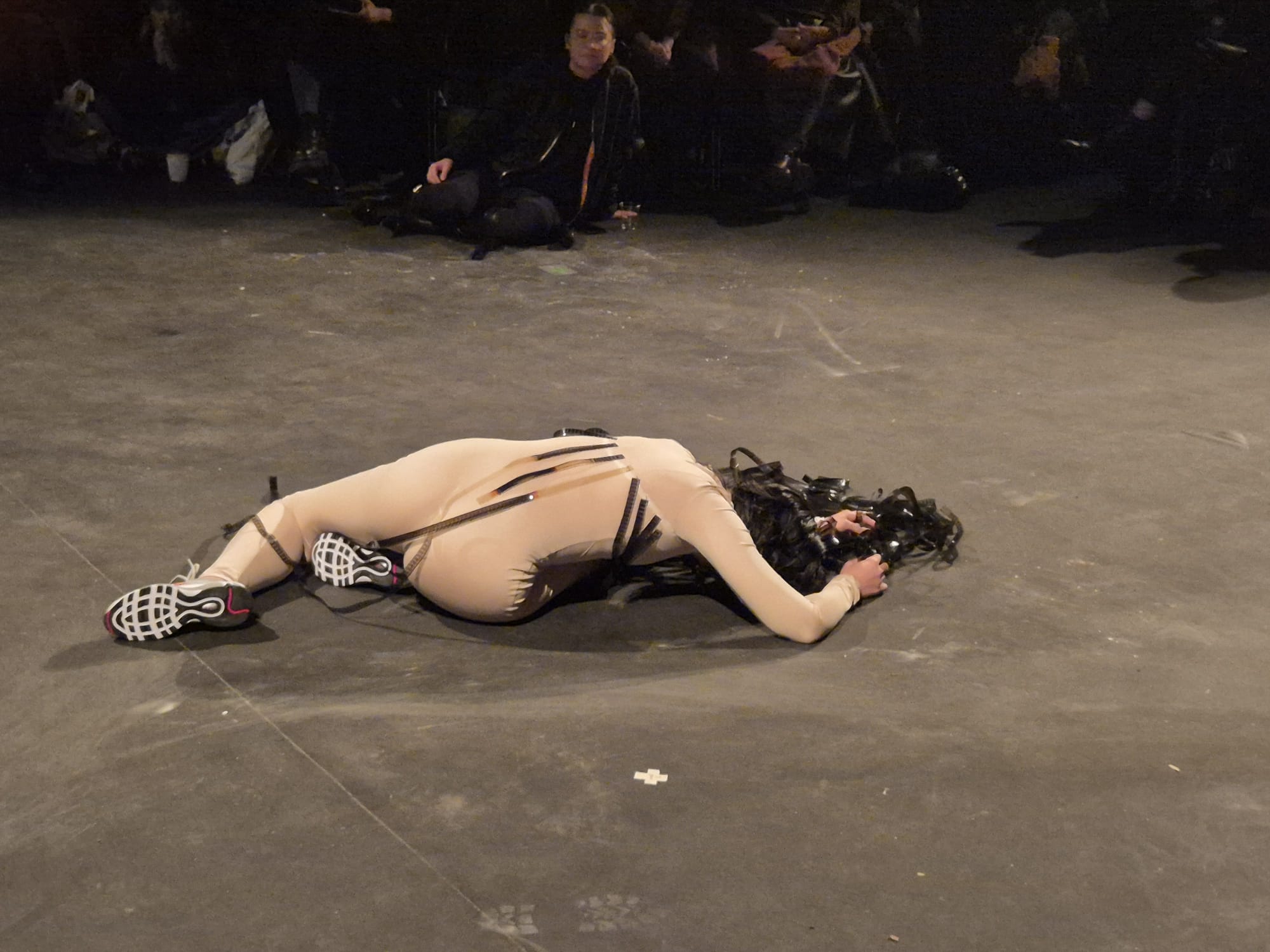
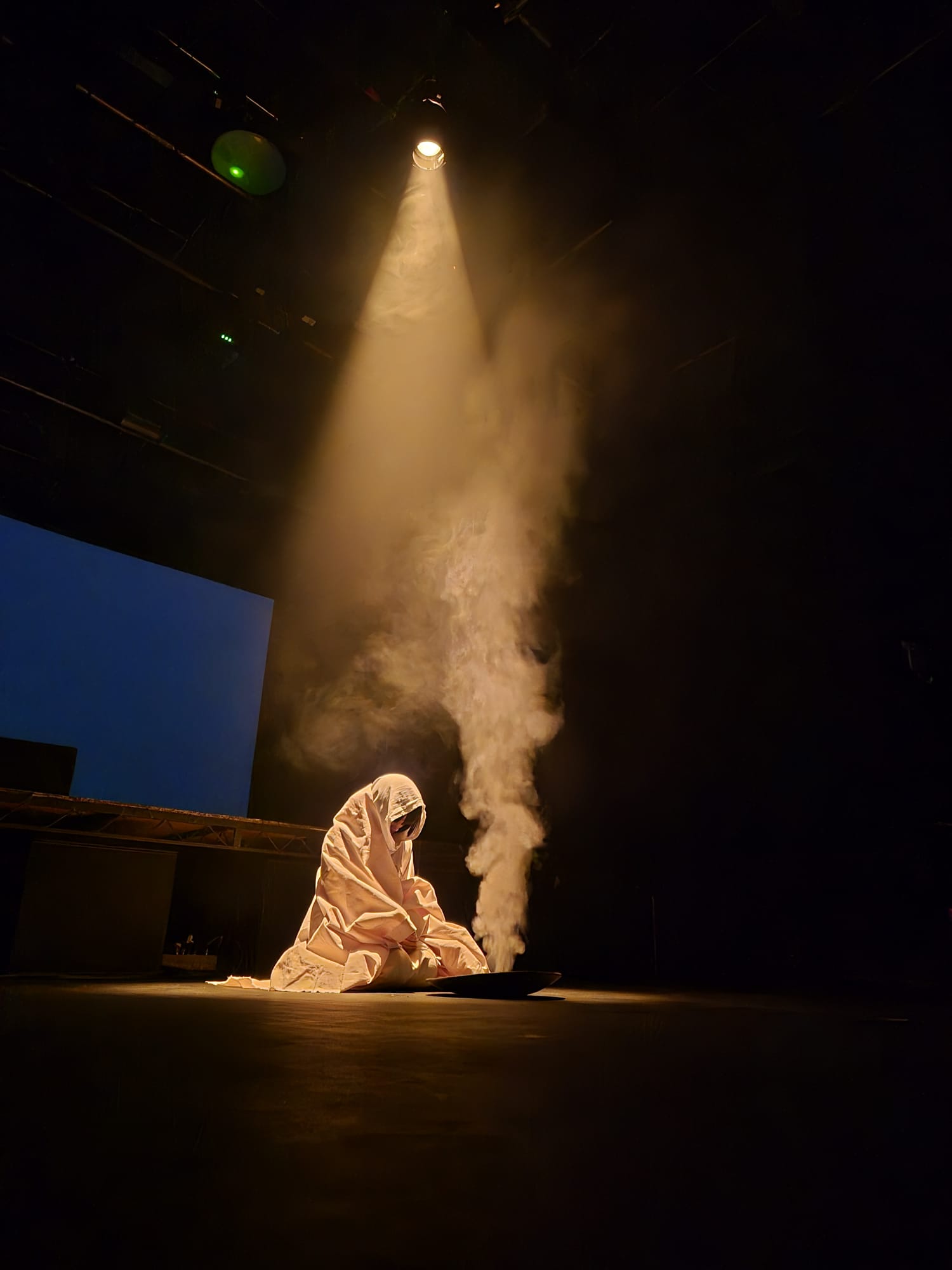
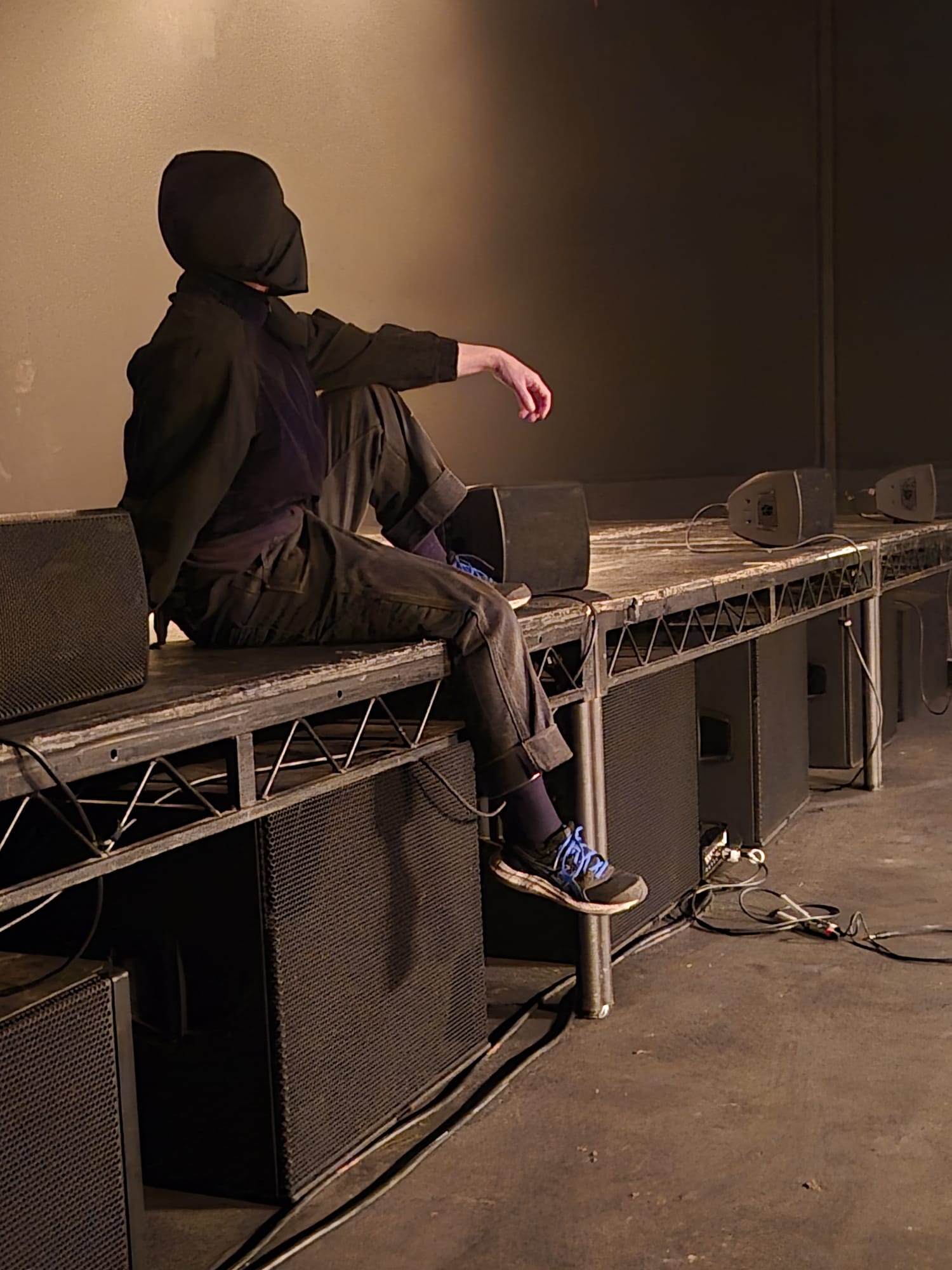
Choreographic Devices 4 at ICA, London
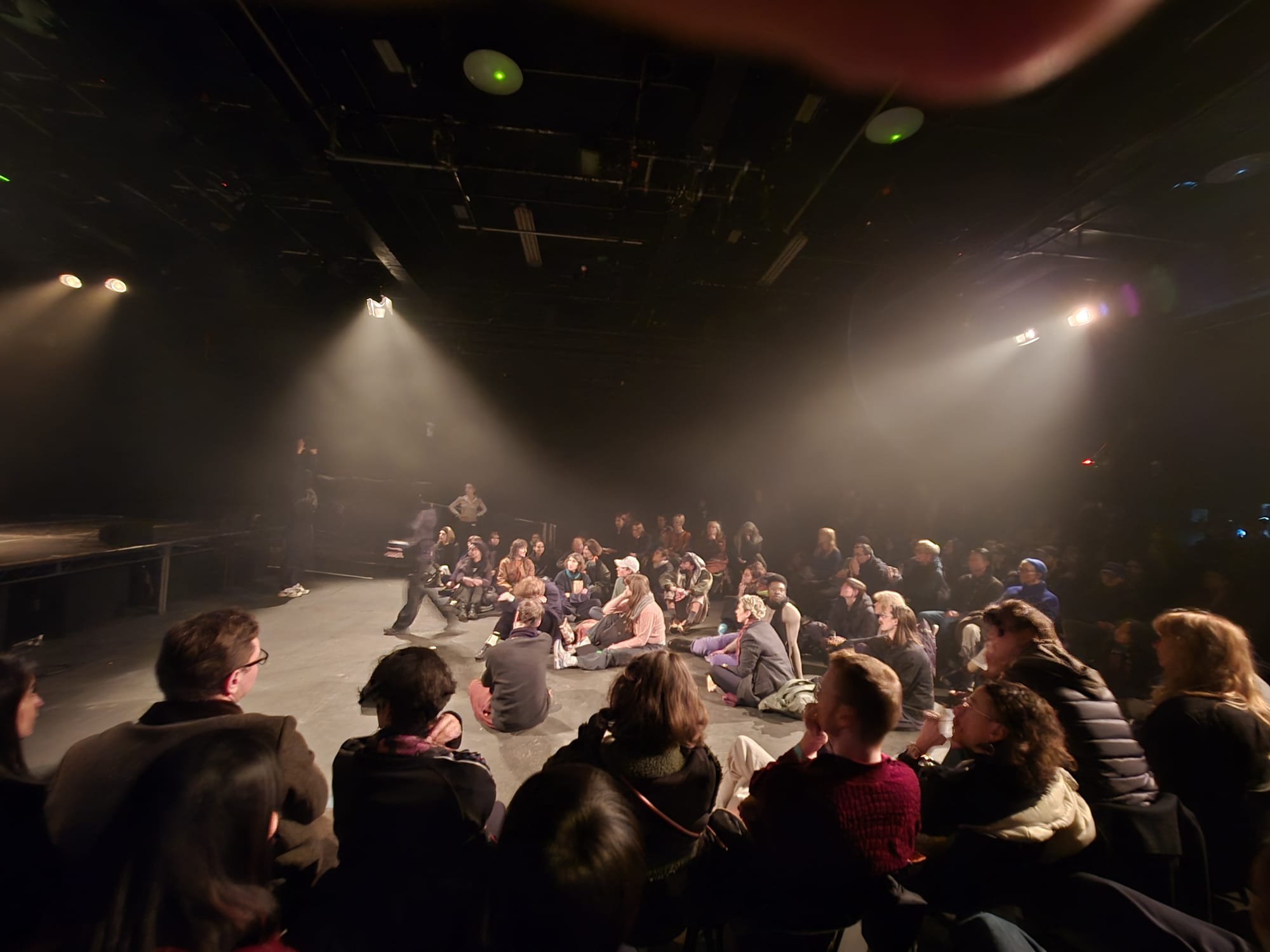
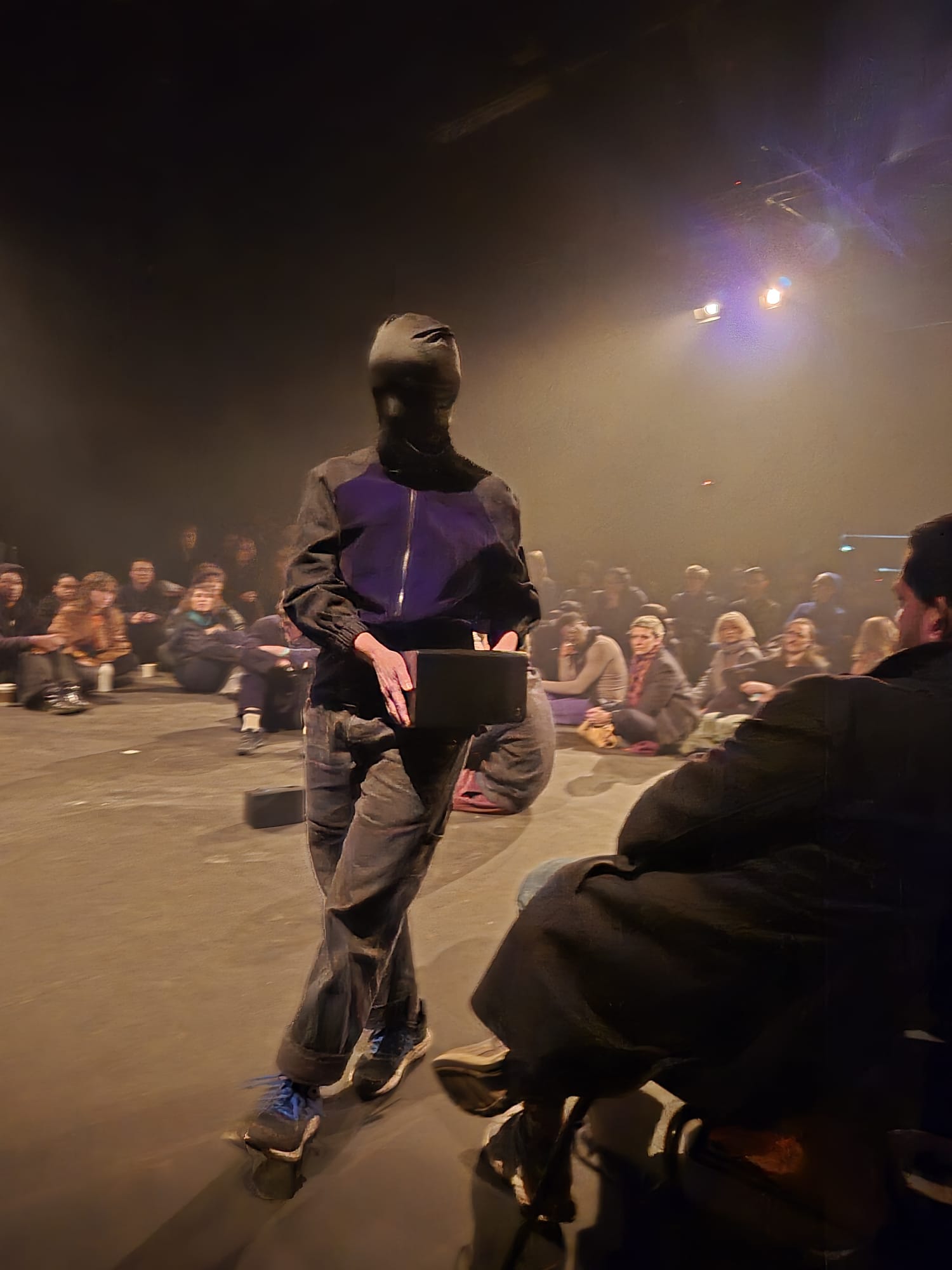
Choreographic Devices is an annual event series that activates the choreographic as a methodology for trans-disciplinary forms of inquiry and rehearsal. Bringing together protagonists from across an expanded ecology of practices, this multi-format forum speculates on and with choreographic arrangements and their complex modes of co-production. Choreographic Devices tests how material assemblages, organisational forms, and modes of being alongside each other, might be choreographed otherwise. Contributors to the fourth iteration include Murat Adash, Anjana Bala, jee chan, Ofri Cnaani, Denise Ferreira da Silva, Ella Finer, keyon gaskin, Jelena Golubović, Martin Hargreaves, Raimundas Malasauskas, Arjuna Neuman, Nissa Nishikawa, Bilawa Ade Respati, Heidi Rustgaard, Sara Sassanelli, Edgar Schmitz, SERAFINE1369, Esther Siddiquie, Vaida Stepanovaité and Bartosz Zurowski.
Our session:
A habit is a form. A thought is a form. A friendship is a form
Ofri Cnaani and Vaida Stepanovaitė with Anjana Bala, Martin Hargreaves, Heidi Rustgaard, and Esther Siddiquie

-----------------------------------------------------------------------------------------------------------------
Goldsmiths, University of London
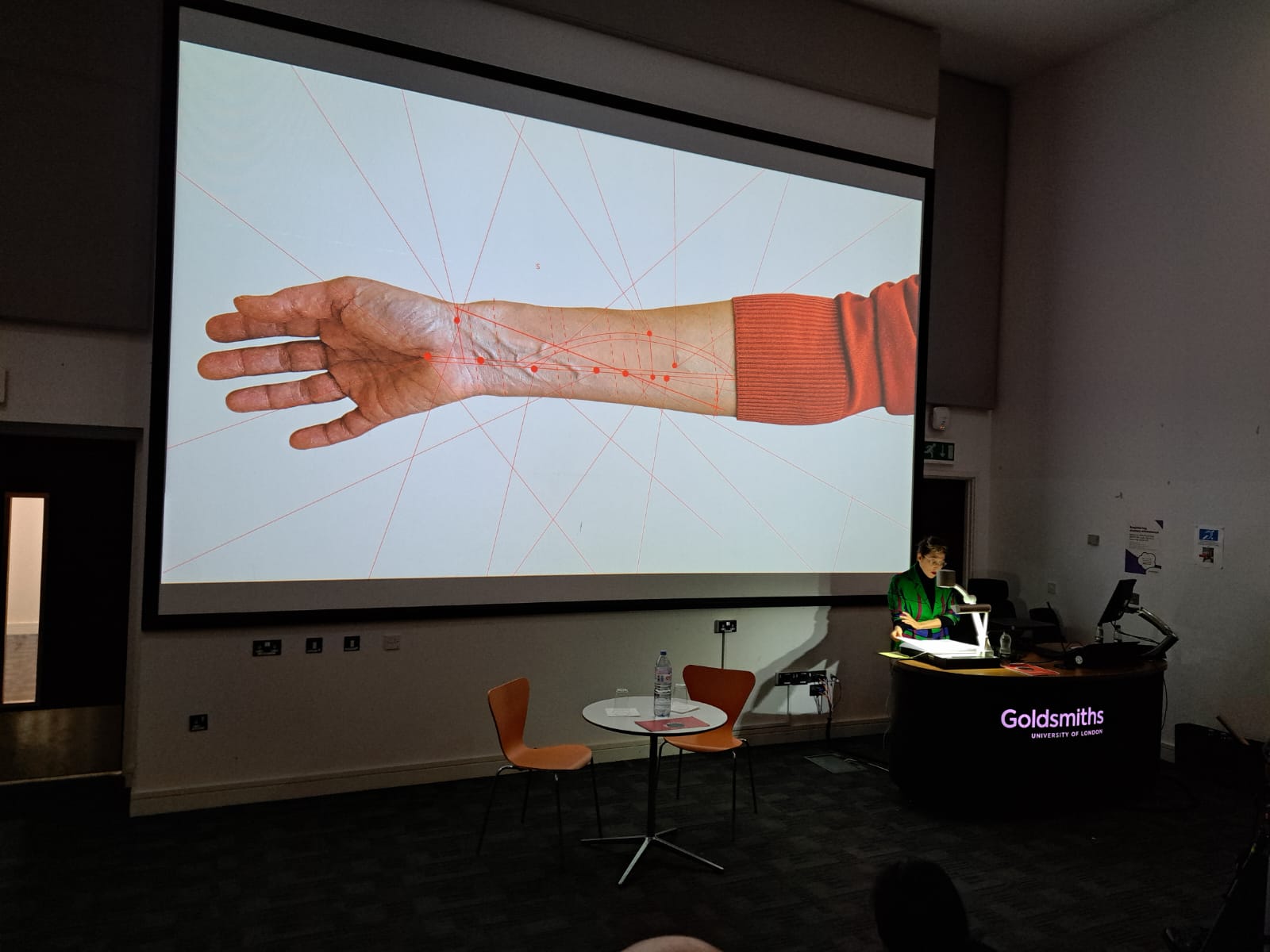
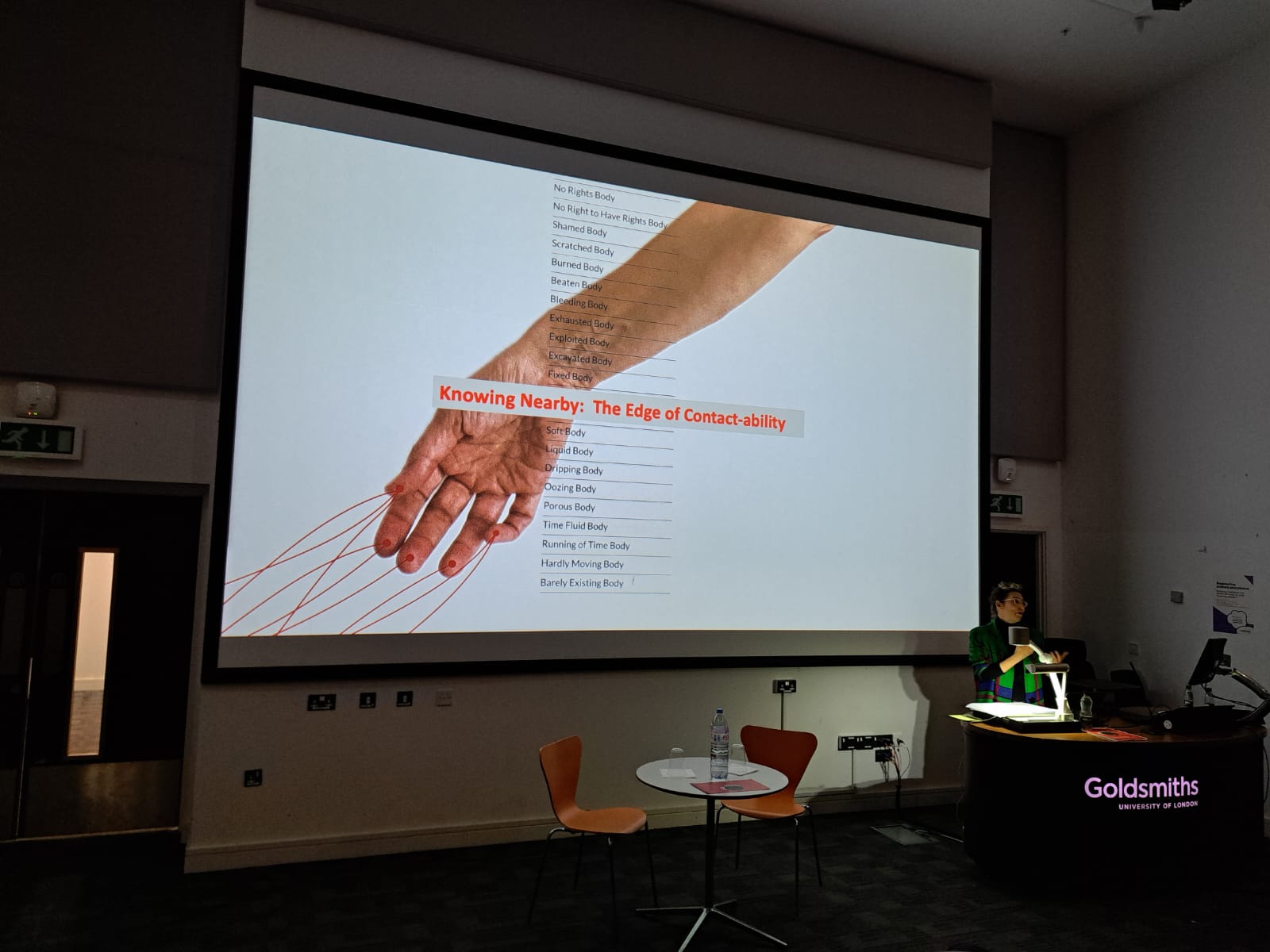
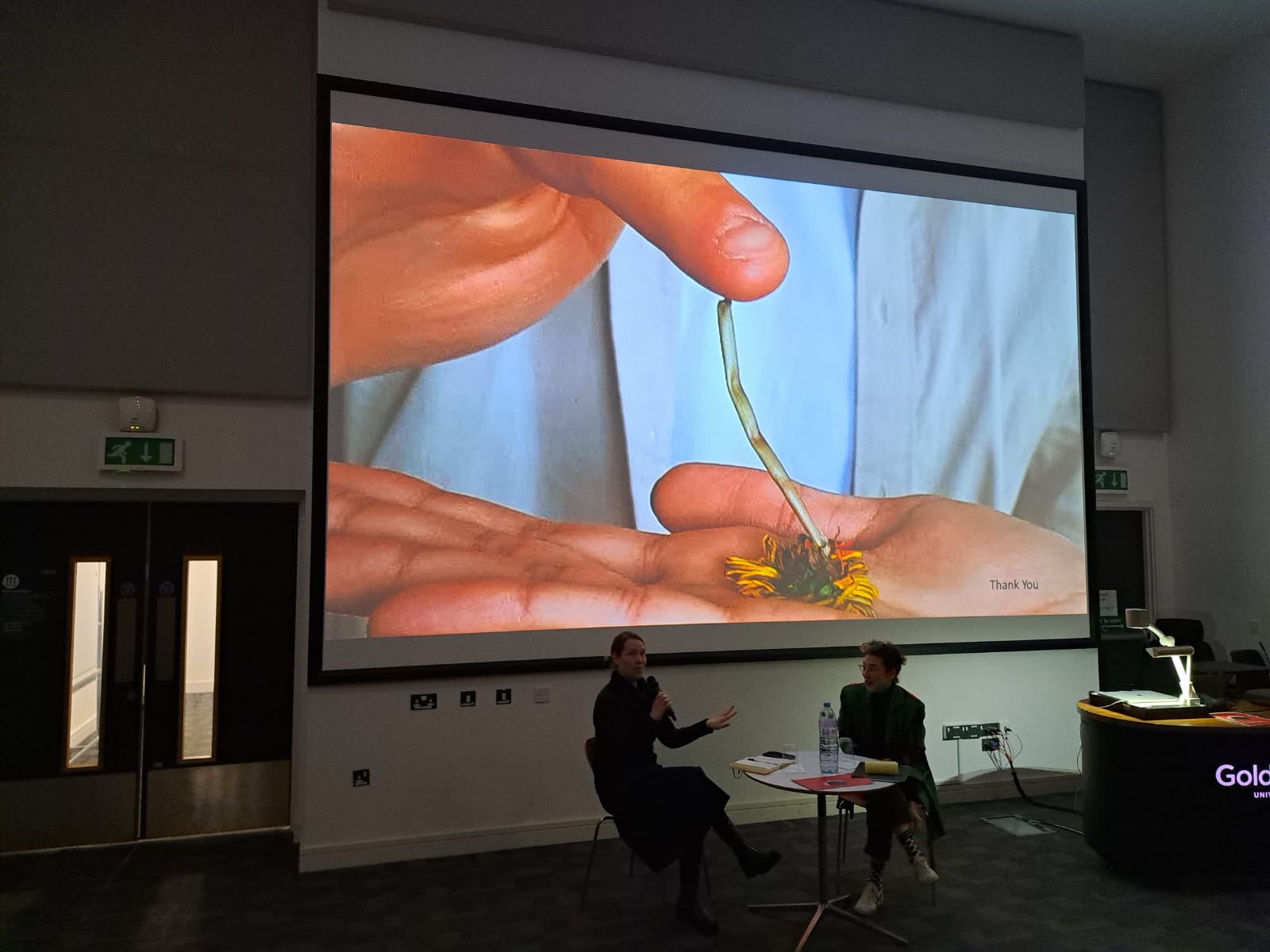
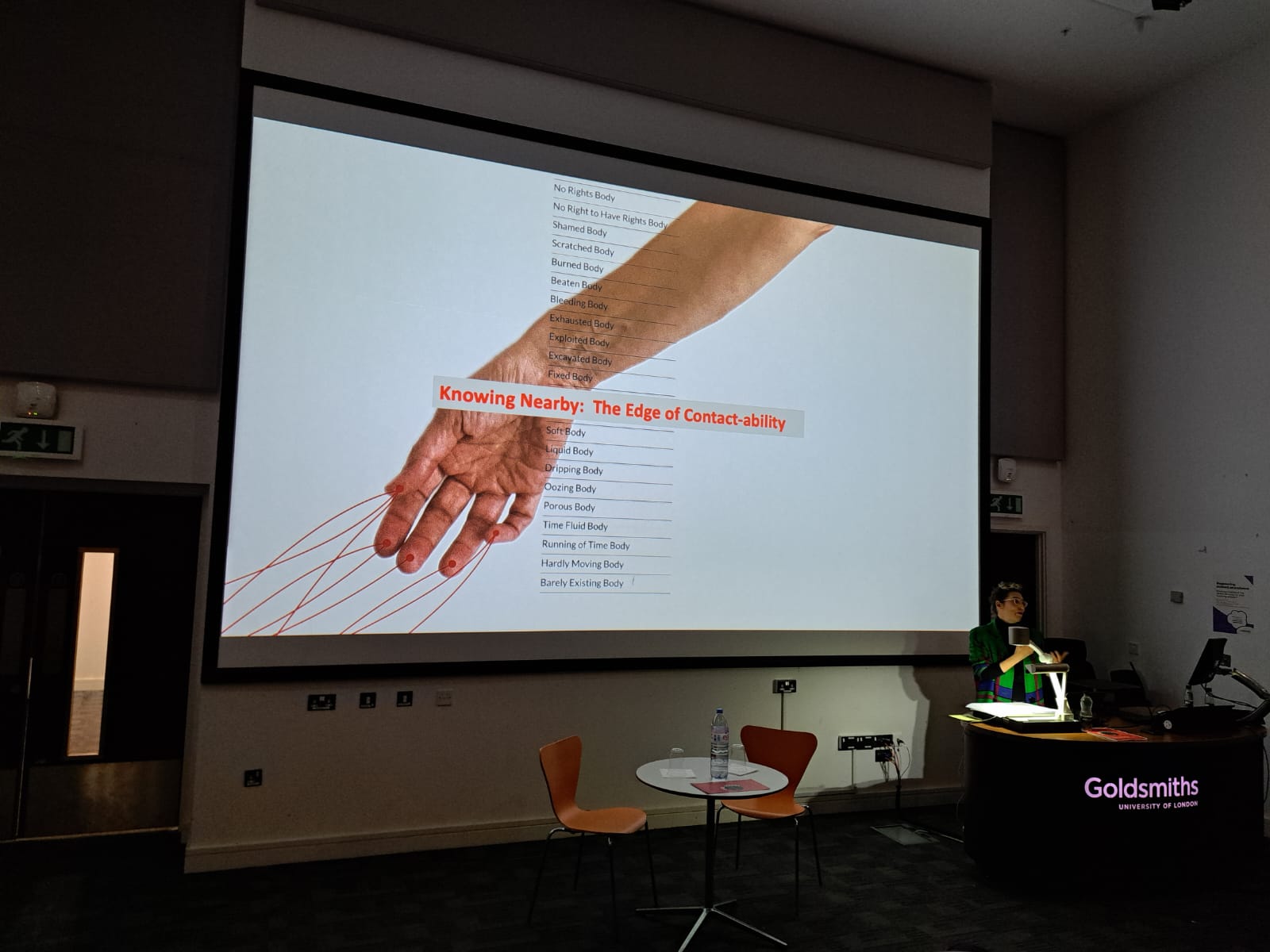
THE CONTACTLESS CONDITION: SOMATIC KNOWLEDGE AND COLONIAL TECHNOLOGIES OF REACH chaired by EMILY ROSAMUND
As part of:
OMNI-ACCESS: Post- and decolonial perspectives on the platformed city
Two-day symposium with Vyjayanthi Rao, Sandro Mezzadra, Ofri Cnaani, Ravi Sundaram, Teddy Cruz & Fonna Forman, Peter Mörtenböck & Helge Mooshammer


Fall 2024
November 6, 2024
Leaking Collections: The Digital Afterlife of Cultural Objects
An online event. Book!
6:00 – 8:00pm
A online presentation/conversation between curator/researcher Annet Dekker, researcher and curator Daniela Agostinho and artist Ofri Cnaani, as part of The CONTACTLESS CONDITION exhibition public programme, moderated by Prof. Joasia Krysa.
Inspired by the works in the exhibition, the conversation will address the politics of digital collections and the data afterlife of cultural objects. In recent years, many museums have incorporated data-driven tools into their digital collections. However, just as the drive to archive information has historically been fundamental to the exercise of colonial power, the digitization and datafication of collections are far from a purely technical endeavour. Recent research has shown that data infrastructures often perpetuate the colonial taxonomic gaze, transforming it into a symbolic calculus. This event will explore possible critical methodologies required to disseminate cultural knowledge while simultaneously protecting it, especially in the context of ongoing colonial power dynamics. The discussion will also consider how practice-based methodologies can trouble the afterlife of cultural data, and reimagine how we engage with and interpret these collections.
_______________________________________________________________
23. - 26. October 2024
AFTER MEMORY - Recalling and Foretelling across Time, Space, and Networks
Device Amnesia: Lecture Performance in Two Parts
In this lecture performance, artist Ofri Cnaani will present two segments from her ongoing Digital Afterness research project. The performance serves as a method to develop a lexicon that activates the space between theory, visual representation, and speculative writing. Leaking Lands (Part One) examines the catastrophic fire that destroyed two centuries of treasures at Brazil’s National Museum. The work investigates the residues of body, data, and matter left behind, forming an ecology of ‘leftovers’ that exists between eras and orders. Motivated by the notion of non-human testimonies, this piece aims to splice scientific and poetic knowledge to capture the post-fire transition from physical or biological form to the digital realm, through the perspective of six entities. Device Amnesia (Part Two) explores the island nation of Tuvalu’s journey toward becoming the “First Digital Nation” amidst the looming threat of climate change, using digital twin technology. The work explores the nation’s digital transition, through the lens of four technological devices, each representing a different techno-political affair, to ask how accumulated local knowledge could become intelligible and reproducible across contexts.

Center for Art and Media - ZKM
orgenized by Nathalia Lavigne, Víctor Fancelli Capdevila and Lisa Deml
_______________________________________________________________
23. - 26. October 2024
AFTER MEMORY - Recalling and Foretelling across Time, Space, and Networks
Center for Art and Media - ZKM
orgenized by Nathalia Lavigne, Víctor Fancelli Capdevila and Lisa Deml
Unmaping Landscapes
Giselle Beiguelman, Ofri Cnaani, Thiago Leiros-Costa, Pedro Oliveira
Moderated by: Lisa Deml
The first roundtable explores how memories are inscribed in datafied landscapes and across networked cartographies. Contesting the notion of the digital as a “terra nullius,” artists and researchers Giselle Beiguelman, Ofri Cnaani, Thiago Costa-Leiros, and Pedro Oliveira retrace the ways in which colonial systems, national identities, and extractivist economies are carved into virtual topographies. Through their respective practices, ranging from media archaeology, ethnomusicology, transmedial performances, and anticolonial studies of listening, they investigate the correlations between geographical and computational territories and the different agencies and ideologies that seek to claim them. Considering the mnemonic nature of platformed landscapes, this roundtable seeks to uncover buried histories, to gather scattered testimonies, and to activate ruins as repositories for multiple histories, both real and imagined ones.

_______________________________________________________________
October 3, 2024 – January 31, 2025:
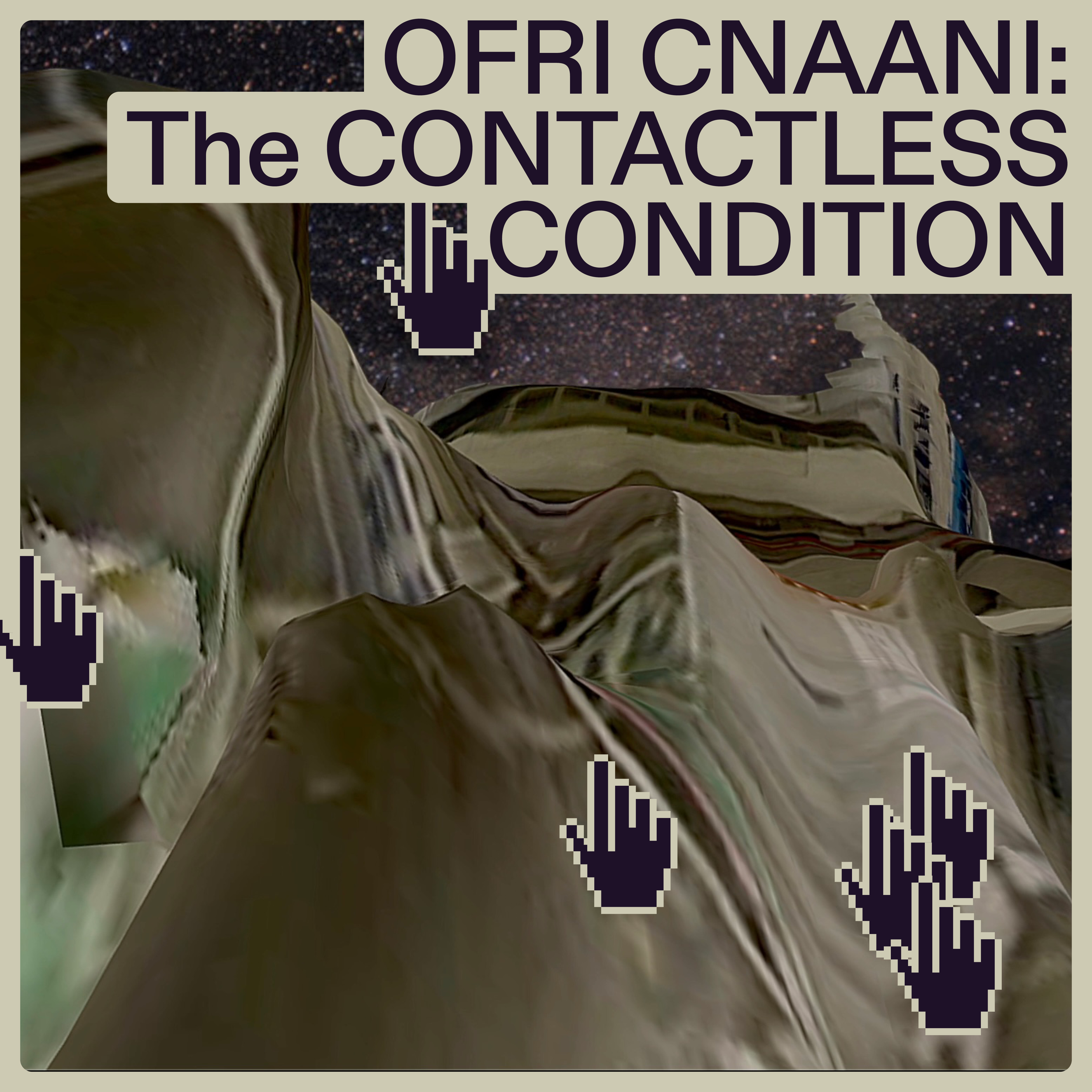
Ofri Cnaani: The Contactless Condition
Exhibition Research Lab (ERL), Liverpool
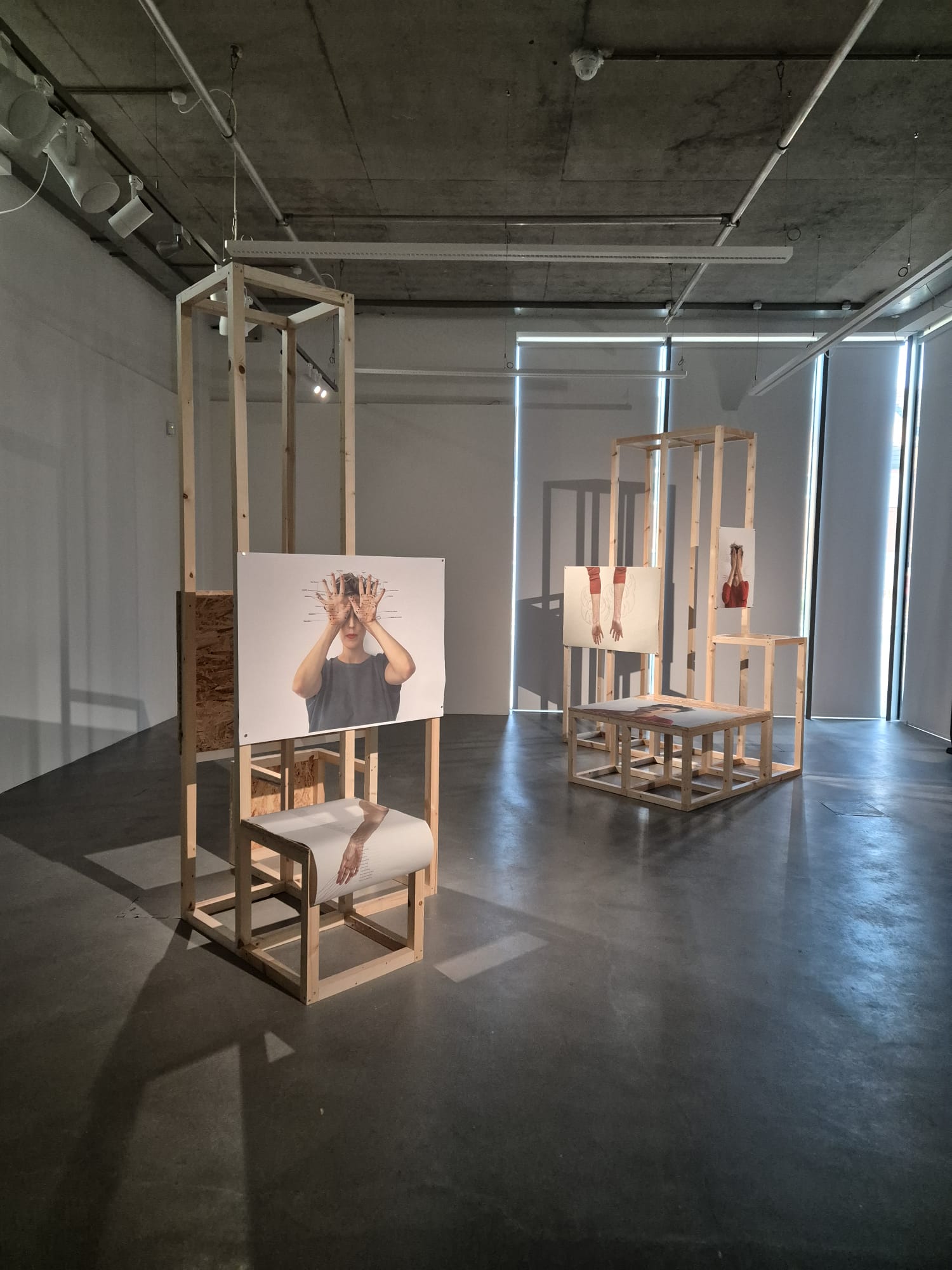
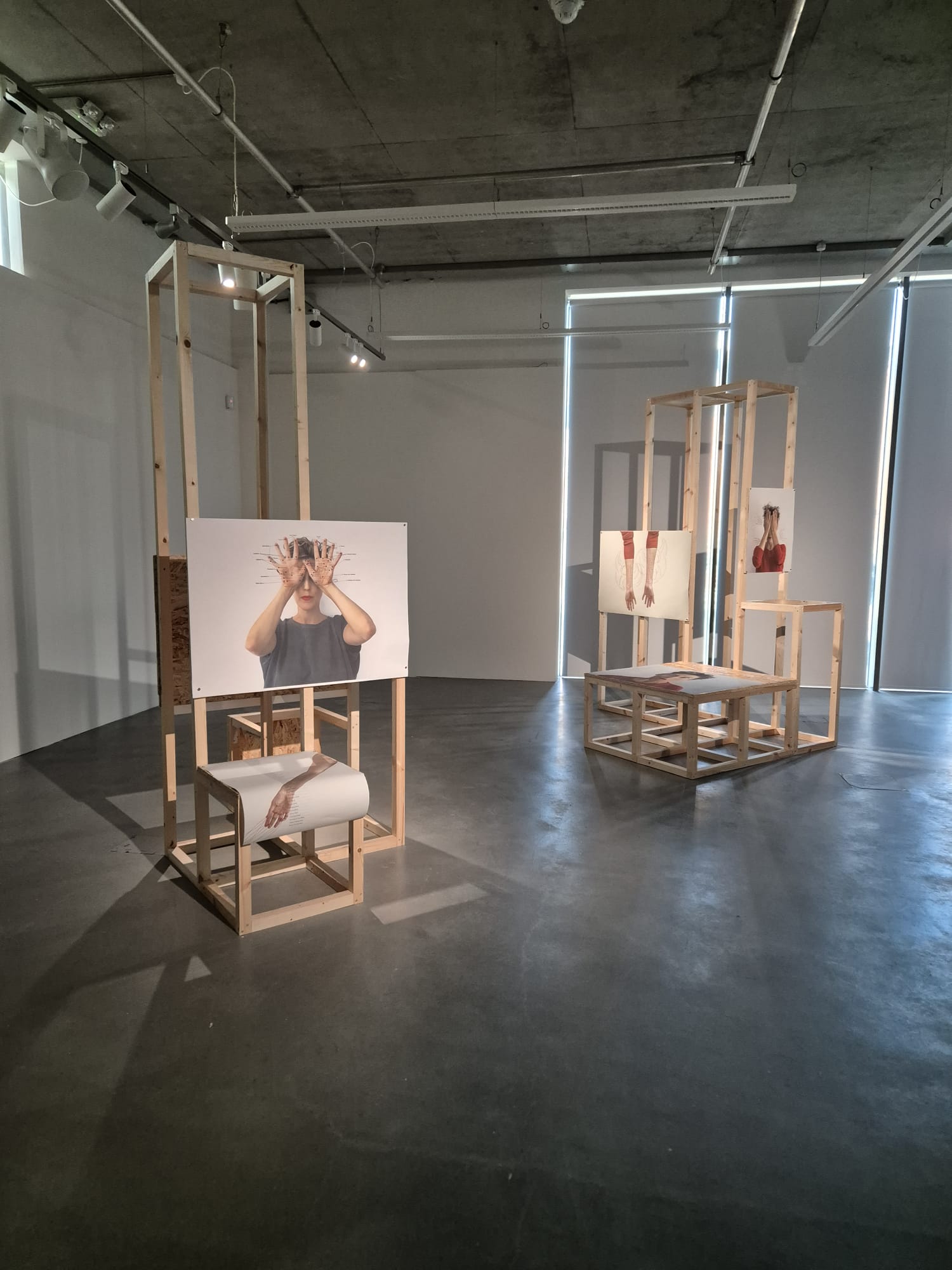
Exhibition Research Lab is delighted to present the first UK solo exhibition of artist and researcher Ofri Cnaani: The Contactless Condition, curated by Or Tshuva.
the exhbtion features four of my most recent projects created since 2020. Developed during the onset of a global pandemic and its subsequent crises, this selection of artworks – spanning video, sound, and photographic installations – raises questions of access, power, and tangibility while suggesting an expanded understanding of the ‘Contactless’ not merely as a technological solution, but as an emerging living condition.

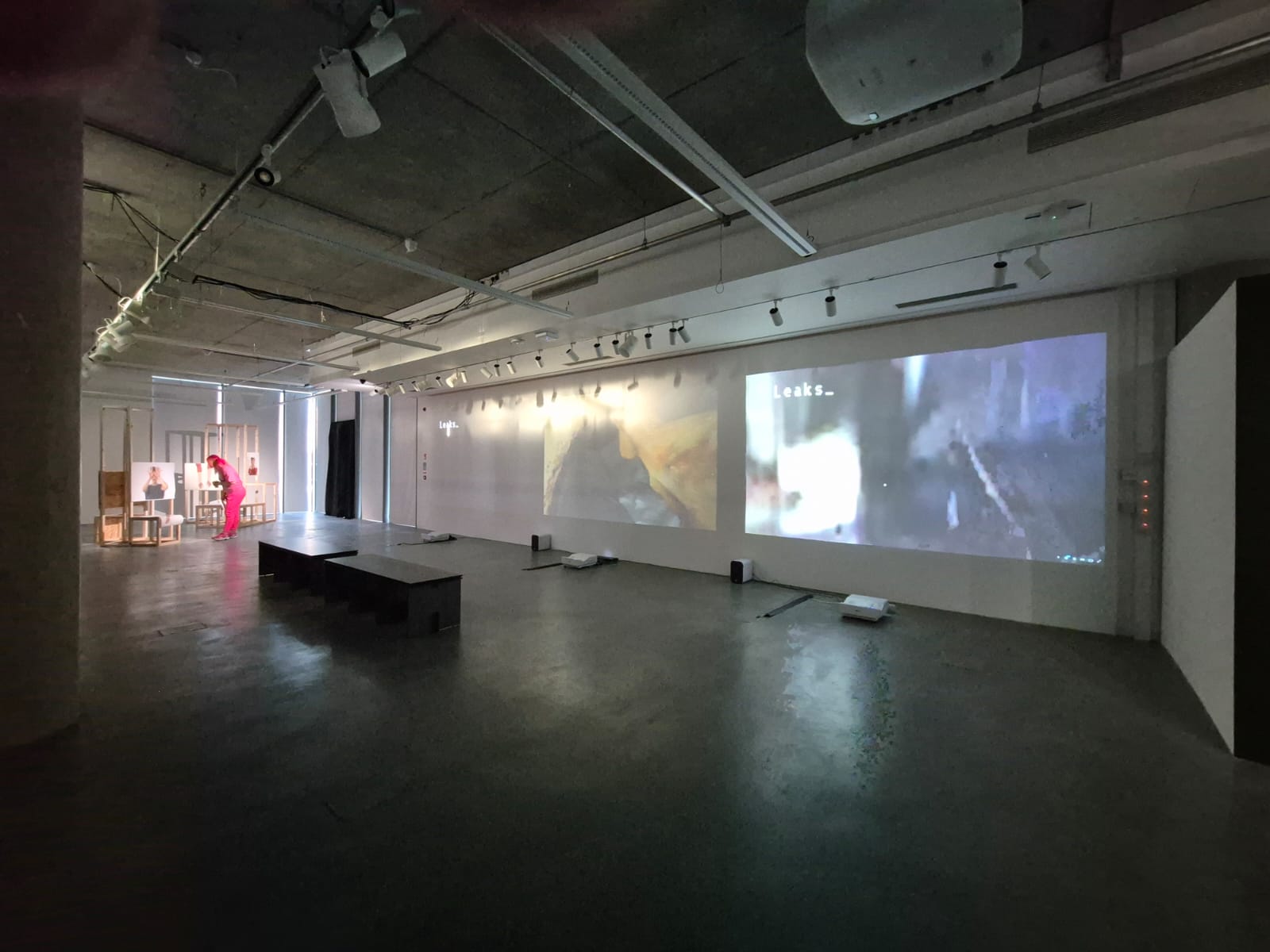
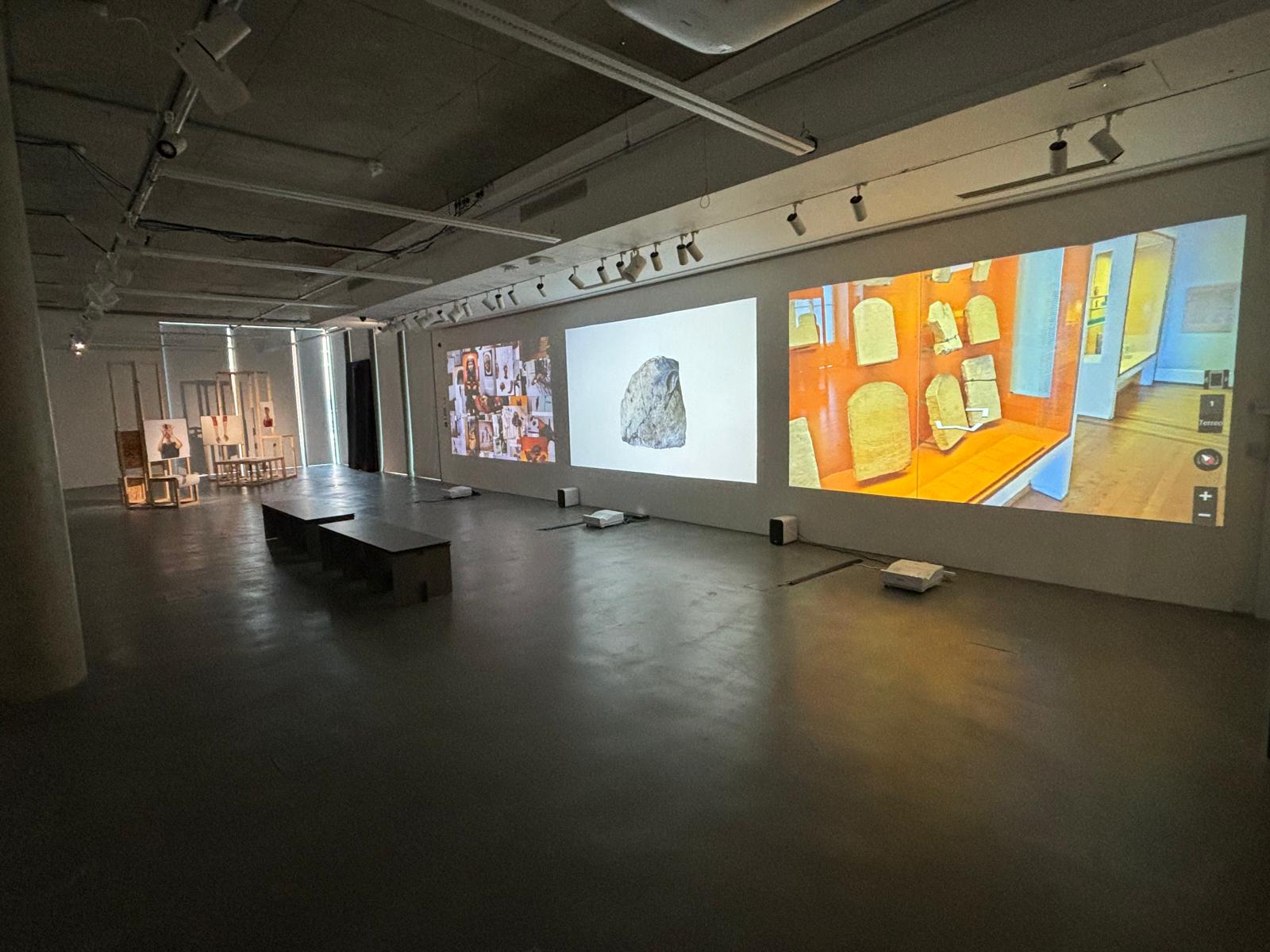
_______________________________________________________________
October 19th, 2024
Live-Line, 2024
A four hours perfromance at the empty Herzlyia Museum of Art
How do we keep a line of thought or the horizon line in these very dark days?
a four-hours perfromance where I tried to maintain a line and thinking through the very basic yet highly political question of the moment: Where do we draw the line?
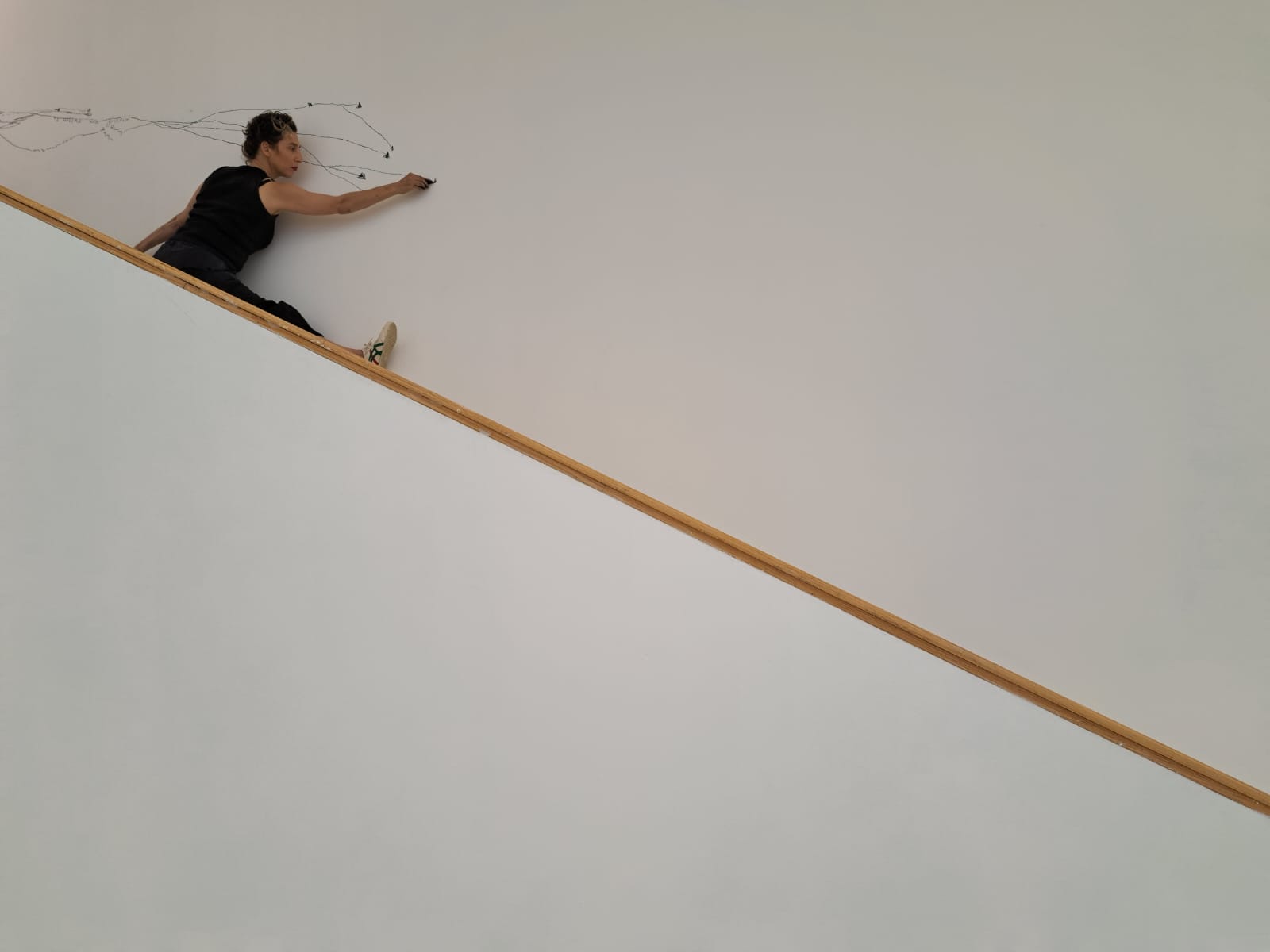
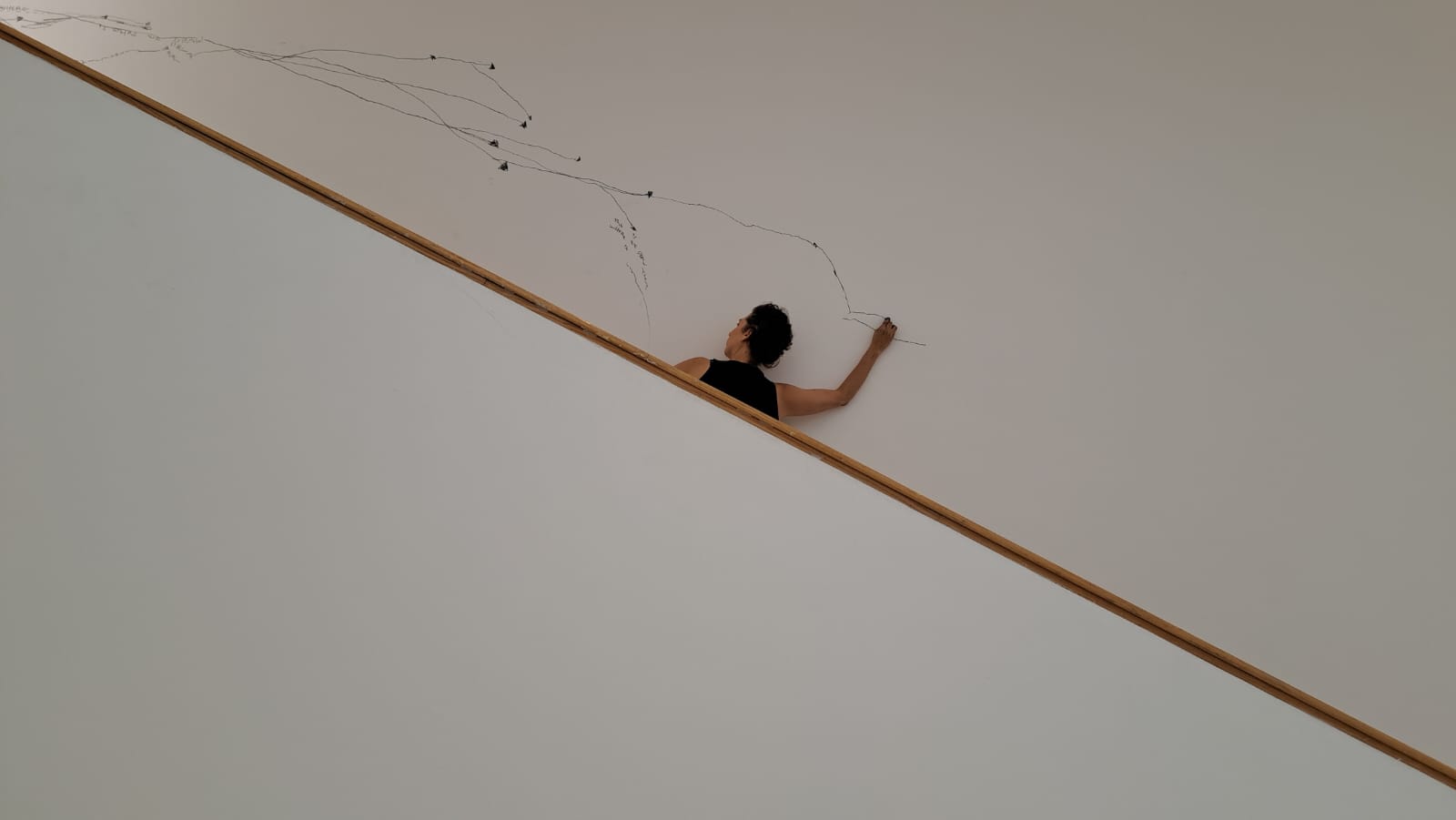
_______________________________________________________________
September 29-30, 2024
Political Imagination Workshop at the Van Leen Institute with Mushon Zer Aviv
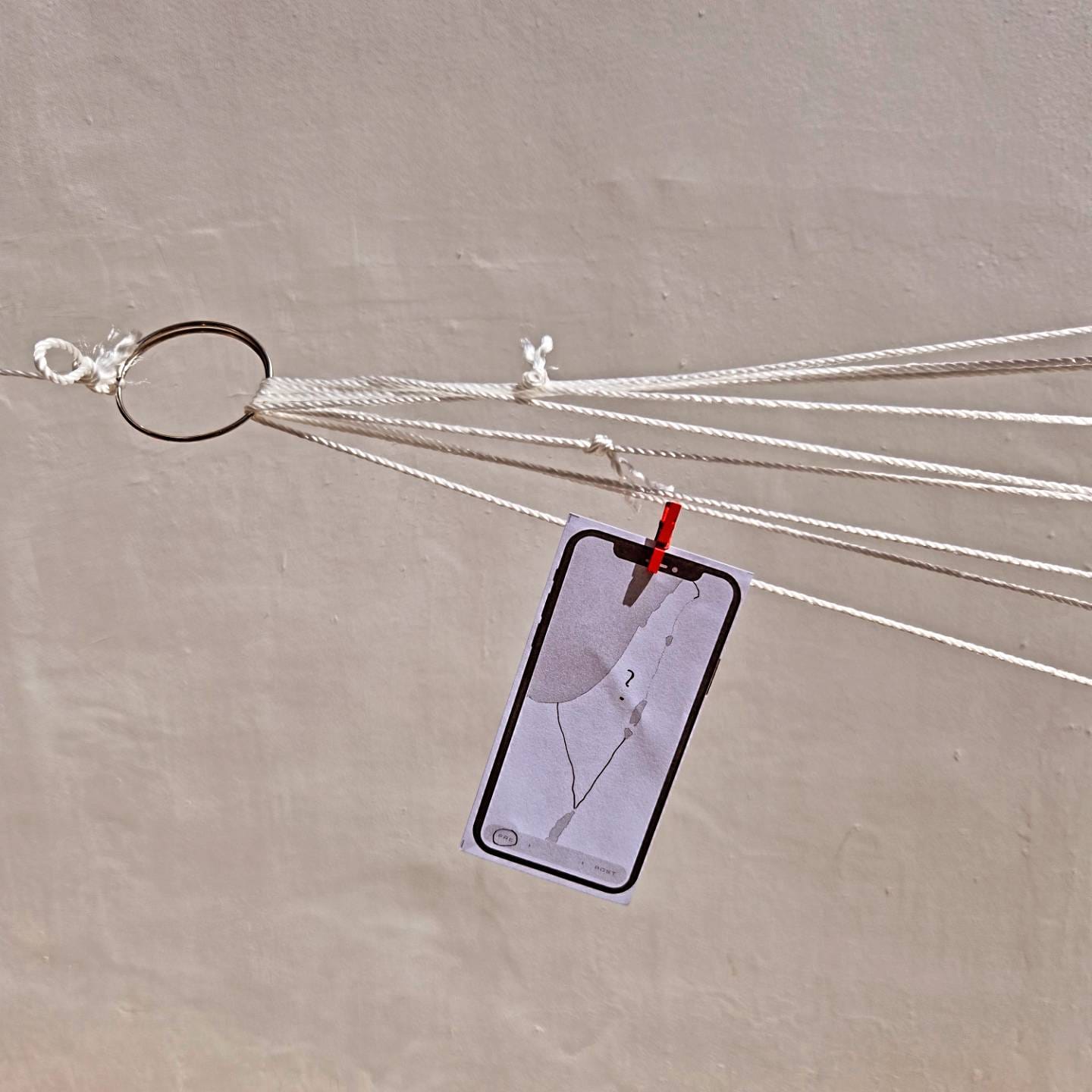
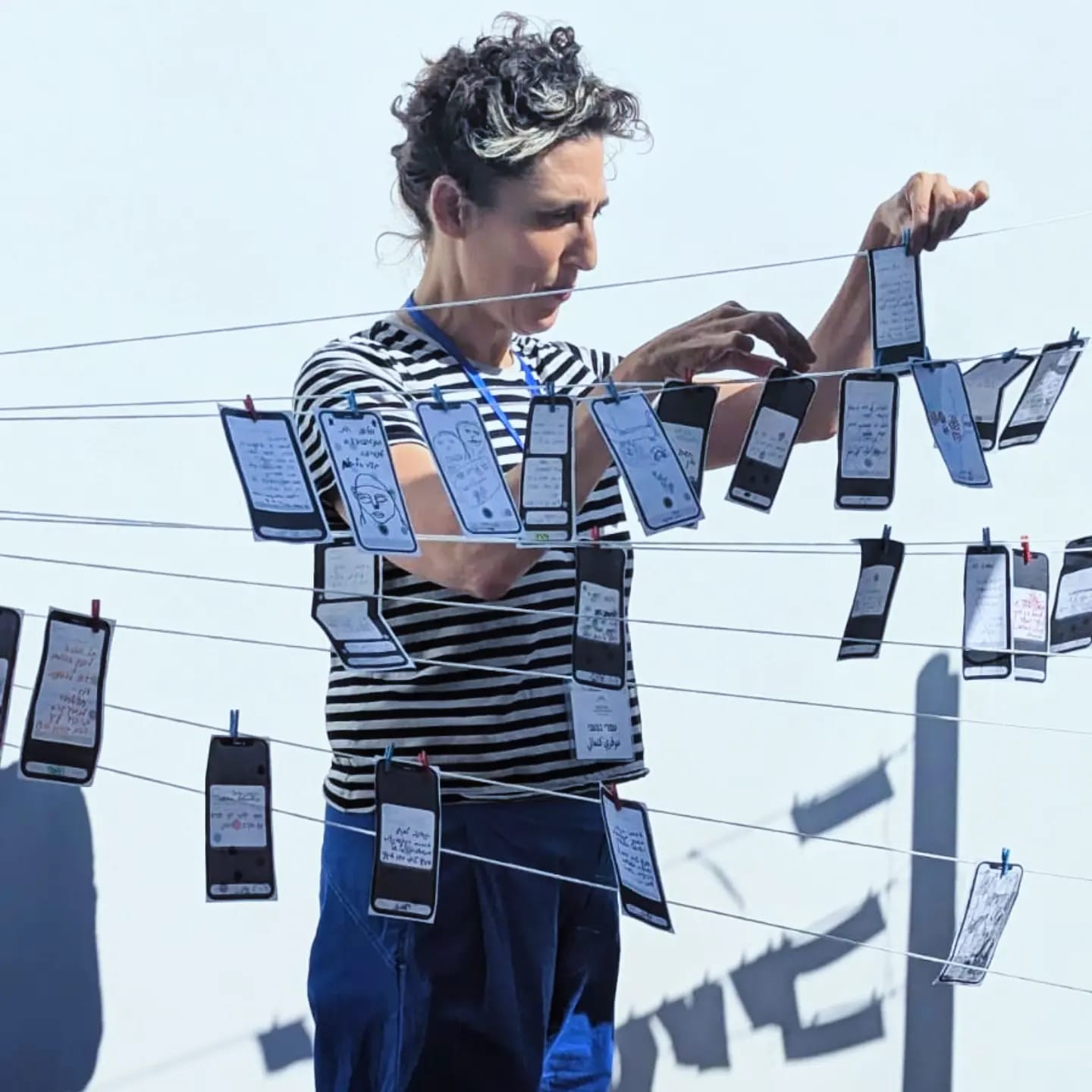
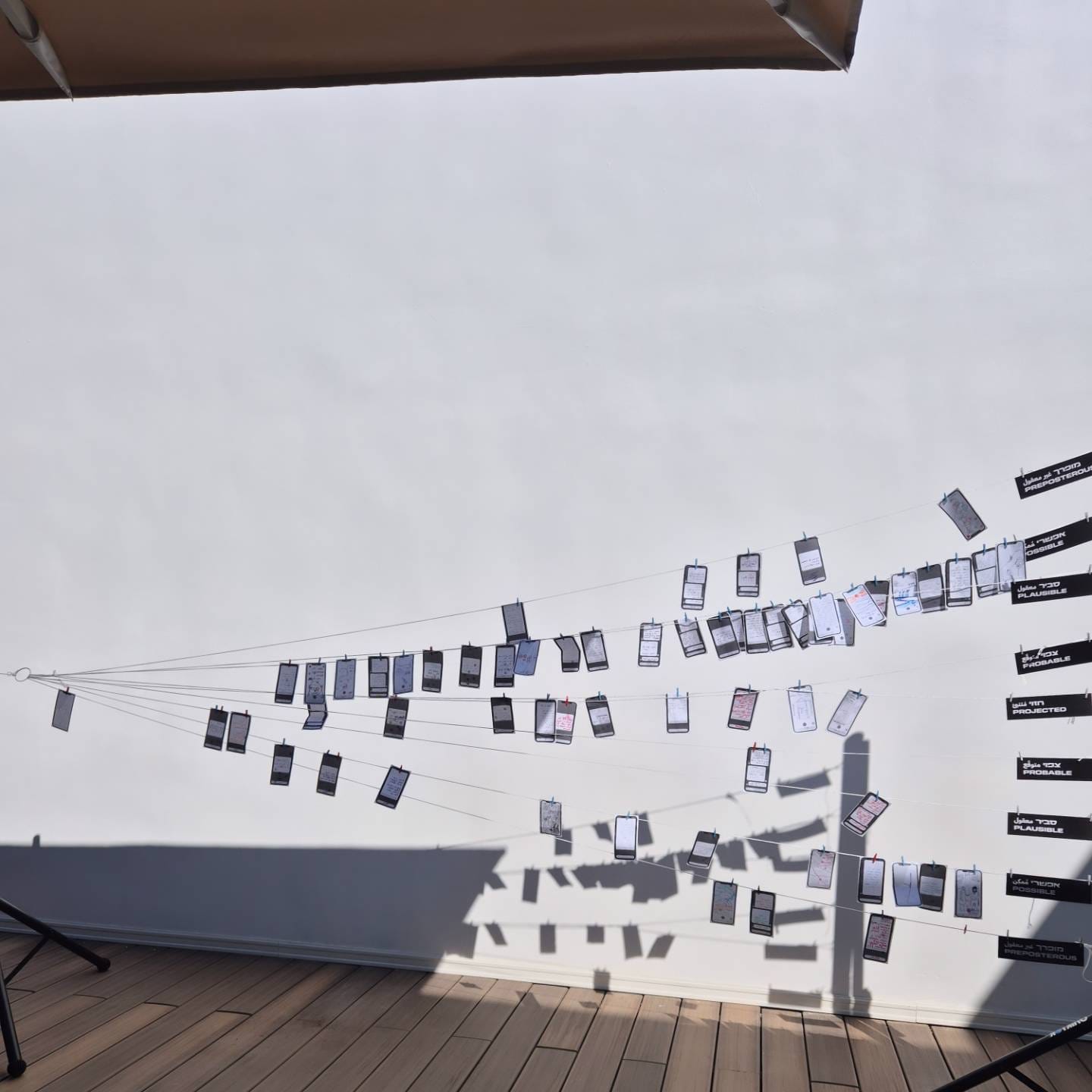
These are days of thick darkness. Many who live between the river and the sea can no longer imagine a future. For two days, I joined Mushon Zer Aviv to co-lead day long workshops about political imagination here and now. We were thinking about structural imagination, critical imagination, and a much needed creative imagination and borrowing methods from science fiction and tools from design fiction to consider the predicted, probable, plausible, possible, and preposterous futures that we want to see in the layered lands between the river and the sea.
_______________________________________________________________
Summer 2024:
Museum der Moderne Salzburg
School of Listening: (Im)possible Conversations
22.07.2024 — 15.09.2024
Curators: Maayan Sheleff (guest curator) with Christina Penetsdorfer
School of Listening is the title of this year’s program of events at the Salzburg International Summer Academy of Fine Arts. The program was developed by guest curator Maayan Sheleff and is dedicated to listening differently.
With works by Ofri Cnaani, Thalia Hoffman, Stav Marin, Samira Saraya, Neta Weiner, and Manar Zuabi as well as works from the Generali Foundation Collection – permanent loan to the Museum der Moderne Salzburg by Joan Jonas and Peter Tscherkassky
![]()
![]()
School of Listening is the title of this year’s program of events at the Salzburg International Summer Academy of Fine Arts. The program was developed by guest curator Maayan Sheleff and is dedicated to listening differently.
With works by Ofri Cnaani, Thalia Hoffman, Stav Marin, Samira Saraya, Neta Weiner, and Manar Zuabi as well as works from the Generali Foundation Collection – permanent loan to the Museum der Moderne Salzburg by Joan Jonas and Peter Tscherkassky


Agust 5th-18, 2024
I will be teaching a two-weeks course at the Salzburg International Summer Academy of Fine Arts
The Space between Us: somatic knowledge and new techno-spatial scopes
8.8.24
Salzburg International Summer Academy of Fine Arts and Museum der Moderne, Salzburg:
Listen to it like you haven’t been born yet, tell it as if you are still in the surrogate womb
Ofri Cnaani with Agnė Jokšė, Carmen Hines and Morgane Billuart.
How deeply are we attuned to the technological systems in which we place ourselves, and which we place in ourselves? The programme will focus on the role of platform capitalism in shaping and orienting user bodies, gender and sexuality. Combining performance, participatory experience and live podcast, the evening will bring together artists Agnė Jokšė and Ofri Cnaani, and researchers-creators Carmen Hines and Morgane Billuart.
The event is part of Public programme for the 2024 Salzburg International Summer Academy, School of Listening orgenized by Maayan Sheleff
and School of Listening: (Im)possible Conversations exhbtion at Museum der Moderne
Curated by Maayan Sheleff (guest curator) with Christina Penetsdorfer
August 2, 2024
Choreographic Devices
co-orgnized by Murat Adash, Ofri Cnaani, Edgar Schmitz, Sara Sassanelli
Choreographic Devices is an annual event series that activates the choreographic as a methodology for trans-disciplinary forms of inquiry and rehearsal. Bringing together contributors from across an expanded ecology of practices, this multi-format forum speculates on and with choreographic arrangements and their complex modes of co-production. Choreographic Devices tests how material assemblages, organisational forms, and modes of being alongside each other might be choreographed otherwise.
For our first Vilnius iteration I co-hosted with Vaida Stepanovaitė
A habit is a form. A thought is a form. A friendship is a form.
Ofri Cnaani and Vaida Stepanovaitė with Agnė Jokšė, Esther Siddiquie, Paveldo institutas, OMSK Social Club, Tarren Johnson and Joel Cocks.
The anonymous collective Invisible Committee once suggested that in times of multiple breakages, we need mutable forms, not affixed institutions. Life, they say, whether biological, singular, or collective, is a continual creation and interaction of forms: ‘A habit is a form. A thought is a form. A friendship is a form.’ Artist Ofri Cnaani and curator Vaida Stepanovaitė invited artists and collectives to rethink social and institutional spaces as inherently choreographic acts and to weave potential openings in their operations. Together, they will respond with short interventions using text, voice, image, and movement. A series of offerings will explore the form’s momentum and its inseparability from other configurations through methods of doing rather than knowing and poke at the calcified imaginaries and structures of knowledge.
_______________________________________________________________
June 18th, 2024, University of Amsterdam
hosted by the Netherlands Institute for Cultural Analysis
Precarious Collections and Data Colonialsm
A Masterclass with Ofri Cnaani and Annet Dekker
Followed by
Digital Afterness: A public talk by Ofri Cnaani
_______________________________________________________________
June 4th, Centre for Critical Data Practices, Aarhus University
Troubling the Lifecycles of Data
Critical Data Practices: Remaking Data Archives, Subjects and Technologies
Symposium
_______________________________________________________________
May 2nd, 2024, University of Applied Arts Vienna
MUSEUMS AS COMMONS: Digital Strategies to Reappropriate the Public Sphere
Lecture by
Ofri Cnaani: From Practice To Commons
followed by a Panel discussion with
Petra Schaper Rinkel, Ofri Cnaani, Julienne Lorz
and Nora Sternfeld
Moderated by
Martina Griesser-Stermscheg
_______________________________________________________________
5–17 August 2024, Salzburg Summer Academy
The Space between Us: somatic knowledge and new techno-spatial scopes
Two-weeks summer course at Salzburg Summer Academy
_______________________________________________________________
August 8th, 2024 at Generali Collection / Museum der Moderne
As part of Salzburg Summer Academy‘s Public Program, curated by Maayan Sheleff
Listen to it like you haven’t been born yet, tell it as you are still in the surrogate womb.
How deeply are we attuned to the technological systems we place ourselves in, and we place in ourselves? The program will focus on the role of platform capitalism in shaping and orienting user bodies, gender and sexuality. Combining performance, participatory experience and live podcast, the evening will bring together artists Agnė Jokšė and Ofri Cnaani, and researchers-creators Carmen Lael Hines and Morgane Billuart. Agnė Jokšė works with words. They are currently creating a non-binary Lithuanian language and use performance to explore queerness and language. Jokšė will present Lezbynai (2020), an erotic story about lesbian love in the background of the Lazdynai district where the artist grew up. Artist Ofri Cnaani will lead the audience in Stories from the Surrogate Womb, an exploration of the Generali collection / Museum der Moderne(?? Location dependent) that focuses on the idea of somatic listening. The performance is a personal wandering through call-and-response prompts and allows participants to re-experience familiar or unfamiliar sites in the collection through the notion of choreographic listening.
Carmen Lael Hines and Morgane Billuart's recent research and writings focus on the fast-growing industry of Femtech, a term which describes the software, products and digital services that focus on female health. In their performative lecture and live podcast recording, Girlemployee, Billuart and Hines use podcasts as a performative medium for presenting research and discussing the history of critiquing platforms via platforms. Together with the audience, they ask when the podcast becomes a space for articulating alternative knowledge-making structures. How do podcasts appeal to the temporalities of post-capitalist time-keeping – voices that feed you information as you move from one location to the other?
_______________________________________________________________
Choreographic Devices 2023
TU Wien
Choreographic Devices 2022
December 6th, 2016
Public Performance and Social interventions
Public Art Course, School of Visual Arts
January 28th, 2106
Compare and Contrast, lecture performance at the Tel Aviv Museum of Art, Helena Rubinstein pavilion
January 29th, 2016
Museum is a School
Talk at Haifa University, MFA program
Fall 2016
The Fourth Dimension: Video Space and the Broken Screen at SVA
February 25th, 2015
Artist Talk and studio visits at Hunter MFA (my alma mater)
February 11th, 2015
Studio visits at New York Studio Residency Program (AICAD)
School of visual Arts, New York
check out my SVA Profile
City as Site: Public art as Social Intervention
I'm the coordinator and serve as a core faculty at the new SVA residency, City as Site: Public Art as Social intervention.
for more info, check out SVA site
or our dedicated site:
https://www.sva.edu/special-programs/summer-residency-programs/public-art/city-as-site
https://cargocollective.com/svacitysite
SVA : Critical and Visual studies / continuing Ed courses:
Sites Unseen: Memory, Place and Identity
The Fourth Dimension: Video, Space, and the Broken Screen
International Center of Photography
The Photographic Image In Space: Photography, Video and Installation


